

2019-10-22 19:00:21
Yield and yield composition of white bean varieties affected by the amount of boric acid and application method
Seyed Mashaallah Hosseinia and Zohreh Amini
aSoil and Water Research Department, Fars Agricultural and Natural Resources Research and Education Center, AREEO, Shiraz, Iran;
Eghlid Agriculture and Natural Resources Research Station, Eghlid, Iran
Introduction
Beans are one of the major legume crops and a major source of protein for humans and animals (Hayat et al., 2014). Beans are functional foods because they contain several biologically active compounds, such as enzyme inhibitors, lectins, phytic acid, oligosaccharides and phenolics, which may be found in people and animals that regularly consume this food. Play a metabolic role (D ́az-Batalla et al. 2006). Therefore, with regard to the economic importance of legumes and their different varieties and genotypes and plant nutrition, the research role and significance of achieving high yield and stable production are obvious (Rafique et al. 2016) . In order to increase crop yields, the use of fertilizers is one of the most important factors (Kakar et al., 2002). Boron is an important nutrient for plant growth and metabolism. The lack of boron in plant tissue can lead to reduced crop yields, while excessive supply of boron can also seriously damage plant tissue and sometimes lead to plant death. The right amount of boron in plants is essential for normal growth, which can significantly increase seed germination and seedling growth.
Boron plays a role in physiological processes such as sugar transport, respiration, lignification, nitrogen fixation, cell wall structure, carbohydrates, phenol, indole acetic acid (IAA), ribonucleic acid (RNA), IAA and ascorbate metabolism, cell wall synthesis and plasma membrane Integrity (Marschner 1995; Reis et al. 2008; Trautmann et al. 2014). Boron deficiency is the most common micronutrient deficiencies in plants (Blevins and Lukaszewski 1998; Raimundi, Moreira, and Turri

2013). Boron deficiency may occur in soils with a pH above 6.0 and in calcareous soils (Jasim and Obaid 2014). Samet, Cıkılı and Dursun (2013) pointed out that the deficiency of B in the soil can be regulated by the application of B salt. The boundary levels are relatively close to each other. Administration of B in large amounts increases its concentration in the bud, resulting in toxicity and resulting in reduced plant growth and biomass. Therefore, defining the optimal B rate application is critical to increasing white bean yield. The purpose of this study was to determine the appropriate ratio and method for applying B to three white bean varieties.
Materials and Method
To determine the effect of boric acid on the yield and yield components of the promising white bean (Phaseolus vulgaris L.) including Jules, G11867 and Shekoofa, based on a random complete block design and three replicated field block experiments for two consecutive years has been carried out. Boric acid was applied as a source of B at six application rates/methods of 1-control (no boric acid); 2 and 3 – application of 2 and 4 kg ha-1 boric acid by irrigation water, 4 and 5 – spraying of 0.025% and 0.05% boric acid solution leaves, respectively, and 6 – 2 kg ha of boric acid 1 in combined irrigation water Spray 0.025% boric acid solution. All treatments were performed before the flowering period. The B treatment and the bean variety are placed in the main and subgraphs, respectively. This experiment uses the furrow irrigation method. Each subgraph takes into account four furrows that are 5 meters long and 50 cm wide. In mid-May, seed sowing was carried out manually at a density of 40 capsules per square meter. Artificial control of the weeds of the experiment. No pest control is required. The required amount of boric acid solution is injected into the irrigation system. The study was conducted from 2013 to 2014 at the Eglide Agricultural and Natural Resources Research Station in Eghlid, Iran (at an altitude of 52 420 E, 30 550 N and 2375 m).
According to the results of soil chemical analysis, in addition to the application of B, other required amounts of fertilizer were applied (Table 1). At the flowering stage, the three-leaf leaf samples were sampled to measure the B concentration based on the azomethamine method. At the time of harvest, grain yield, biomass yield, number of grains per plant, 100 grain weight and plant final height were measured. Use SAS v. 9.3 (SAS Inc., Cary, North Carolina, USA), based on Duncan's multi-range test, analysis of variance and mean comparison of treatment methods and their interactions. The correlation coefficient was calculated by IBM SPSS 22 (SPSS Inc., Chicago, Ill., USA).
Results
Since the interaction of the two application factors (variety and boric acid) for one year had a significant effect on most of the measured traits, the analysis of variance and the mean of the traits were compared for the two years. The effect of boric acid on all traits was significant over the two years (Table 2).

Harvest index, leaf B concentration and 100 grain weight are the characteristics of boric acid and variety interactions in these two years are not significant; therefore, the main effect of treatment can be considered for mean comparison. In the two years, no significant differences were found between the application varieties associated with the B concentration. In both years, both Jules and G11867 achieved the highest percentage of harvest index, with no significant difference, while the lowest percentage was obtained in the Shekoofa variety. In the past two years, the Jules variety received a maximum of 100 weights, while the other two varieties showed significant differences in this respect (Table 3). Similarly, a 2 kg ha-1 boric acid foliar spray treated with a 0.025% boric acid solution showed the highest 100-grain weight in two years, and under the control of the first year (no boric acid), 2 kg ha-1 boric acid Foliar spray treatment of 0.025% boric acid solution and 0.05% boric acid solution showed no significant difference, and the same mean comparison letter was obtained for all other traits in the second year.
The mean comparison of the two-way application of boric acid to the varieties shows the average value associated with the number of grains per plant in all B treatments after spraying 0.025% boric acid solution on 2 kg ha-1 boric acid in many years and all varieties. Highest (Table 4). In the first year, the control treatment showed the lowest number of grains and the average plant height under the planting of G11867 and Jules, respectively. Similarly, the lowest average value for the treatment of 4 kg ha-1 boric acid solution was related to the number of seeds cultivated in the Jules variety and the plant height under G11867 cultivation. In the second year, the control treatment showed the lowest mean value of the individual grain of Jules. The boric acid of 2 kg ha-1 was treated before flowering, and the number of seeds per plant of G11867, the plant height of Jules and the number of seeds of Shekoofa were the lowest. Correlation with cereal yields, the results are shown in Figure 1. Within two years, all three varieties numbered 6 received the maximum mean. There was no significant difference in the lowest mean of all treatments in the first and second years of the control treatment. The results of boric acid application and biological yield comparison of the varieties are shown in Figure 2. As with the grain yield results, Treatment 6 achieved the highest average among all three varieties in both years.
Correlation coefficients were analyzed for these two years and are listed in Table 5. Except for the first year's grain yield and harvest index, the correlation coefficient of all other plant heights was significant in both years. In the past two years, all correlations of 100 grain weights were significant. In the first year and the second year, except for the plant height of the first year, the correlation between all measured traits and grain yield was significant. In the first year, there was no significant correlation between the biological yield and the B concentration of the shoots and the harvest index, but other correlations were also significant (Table 5).


Discussion
All three varieties had a positive response to boron application, indicating that these varieties may be sensitive to boron deficiency. In both years, 2kg ha-1 boric acid was sprayed with 0.025% boric acid solution (treatment number 6) to obtain the maximum grain yield (Fig. 1). The treatment showed the highest average value in all boric acid treatments, which were related to plant height, number of seeds per plant (Table 4), 100 weights and leaf B concentration (Table 3).
Low-boron soils are common throughout the world, and legumes are reported to be deficient in boron.
In many countries (Harmankaya et al., 2008). In this experiment, the effective boron in the soil was 0.4 mg kg-1 (Table 1). Since less than 1 mg B kg-1 of the soil was reported to be insufficient for optimal plant growth, the soil had a low effective B content (Reisenaure, Walsh and Hoefr (1973). Crops grown on soils with insufficient B content usually respond to B. Padma et al. (1989a) documented the beneficial effects of B fertilization on the grain yield and yield of beans. Padma et al., 1989b Singing and singing in 1990.
Boron plays an important role in important plant activities such as cell division,meristem development, flower bud and leaf formation, vascular tissue repair, glucose metabolism and transition in hydrocarbons (Kumar and Kayastha 2010) ) Helps to transfer and transfer other nutrients and water from the roots to the shoots (Upadhyay 2012). In the study by Hamsa and Puttaiah (2012), the administration of B significantly increased the accumulation of dry matter in the beans. Similarly, Sing and Sing (1990) and Ceyhan et al. (2007) reported that application of B in B-deficient soil increased the yield of soybean genotype seeds.


In the current study, a significant increase in yield components and the final yield of white beans may be related to the low levels of B in the soil and the higher nutrient requirements of the crop. Similarly, the plant height of plants applying B, 100-grain weight, the increase in the number of grains per grain may be due to B's regulation of carbohydrate metabolism and its transport within plants, except for the synthesis and firming of amino acids and proteins (Debnath and Ghosh) 2011).
The combination of 2 kg ha-1 boric acid and 0.025% boric acid solution in the irrigation water foliar spray resulted in a significant increase in leaf B concentration over the two years. Compared with the control group, the concentration of B in the leaves associated with the treatment increased by 58.36% and 36.09% in the first year and the second year, respectively. The concentration of leaf B plays a major role in the crop. The content of leaf B directly affects flower development, pollen tube growth, pollen permeability, cell division and differentiation. Ultimately, it leads to differentiation of fruit growth and pod development (Gupta et al., 1985).
Plants in the control treatment did not exhibit symptoms of B deficiency, and their content was below 30 mg B kg-1, which is reported to be the critical level of leaves (Wilcox and Fageria 1976). The maximum leaf B concentration was 47.46 mg kg-1, and no symptoms of B toxicity were observed in the current experiment. (Gupta et al. 1985) reported that for most plant species, B toxicity in field conditions usually occurs when plant tissue concentrations exceed 200 mg kg-1.
Conclusion
The overall results indicated that all three varieties were positive for B administration, suggesting that these varieties may be sensitive to B deficiency. The use of boron significantly increases the yield and yield composition of soybean varieties. Prior to the flowering period, the maximum grain yield of all varieties was obtained by spraying 0.025% boric acid solution with 2 kg ha-1 boric acid.
Disclosure statement
The author did not report a potential conflict of interest.
ORCID
Seyed Mashaallah Hosseini http://orcid.org/0000-0002-4394-973X
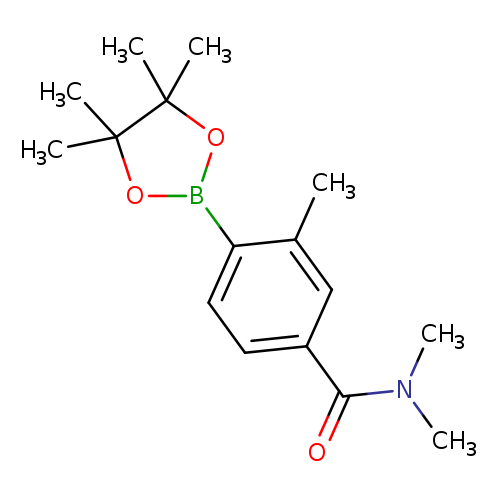
N,N,3-Trimethyl-4-(4,4,5,5-tetramethyl-1,3,2-dioxaborolan-2-yl)benzamideCatalog No.:AA00HI49 CAS No.:1253926-81-6 MDL No.:MFCD18383470 MF:C16H24BNO3 MW:289.1777 |
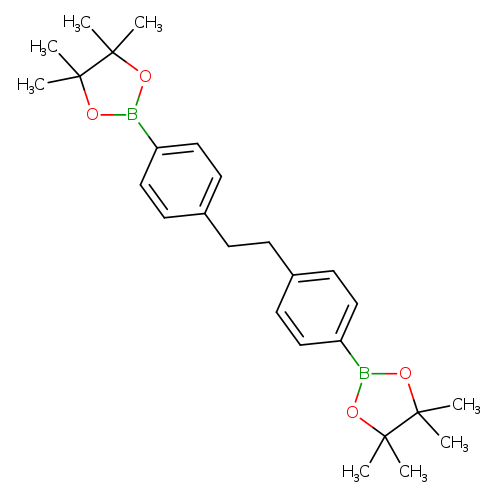
4,4,5,5-Tetramethyl-2-(4-(2-[4-(tetramethyl-1,3,2-dioxaborolan-2-yl)phenyl]ethyl)phenyl)-1,3,2-dioxaborolaneCatalog No.:AA00HWB9 CAS No.:1422172-96-0 MDL No.:MFCD30183263 MF:C26H36B2O4 MW:434.1836 |
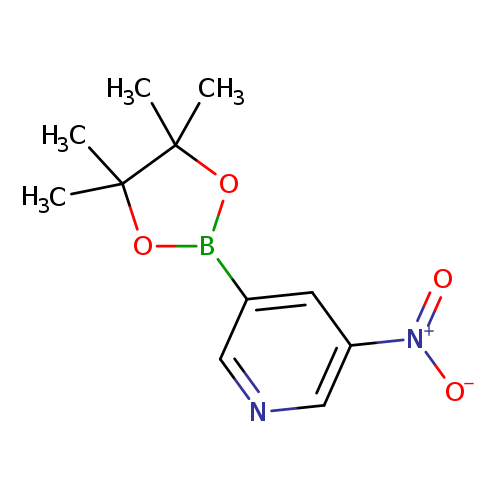
3-Nitro-5-(4,4,5,5-tetramethyl-1,3,2-dioxaborolan-2-yl)pyridineCatalog No.:AA00IMMA CAS No.:2096331-60-9 MDL No.:MFCD11975320 MF:C11H15BN2O4 MW:250.0588 |
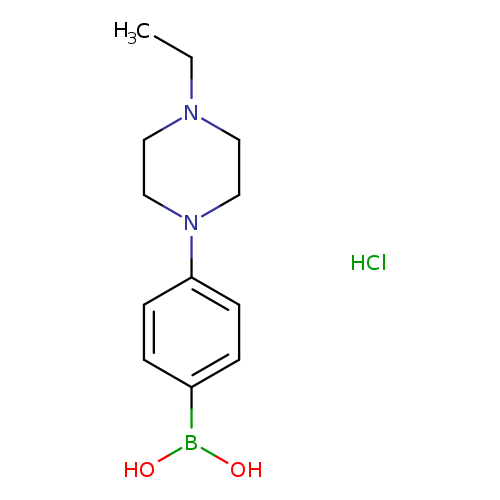
(4-(4-Ethylpiperazin-1-yl)phenyl)boronic acid monohydrochlorideCatalog No.:AA00IML5 CAS No.:2096339-70-5 MDL No.:MFCD28975326 MF:C12H20BClN2O2 MW:270.5634 |
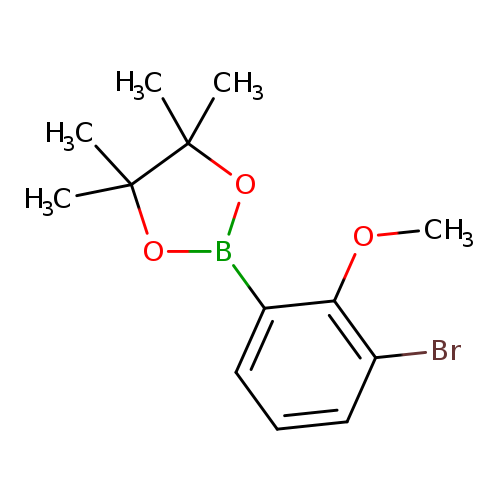
3-Bromo-2-methoxyphenylboronic acid pinacol esterCatalog No.:AA00IML7 CAS No.:2096997-23-6 MDL No.:MFCD24039980 MF:C13H18BBrO3 MW:312.9952 |
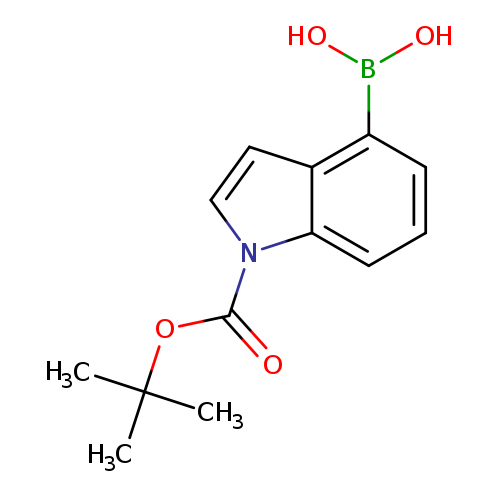
(1-(tert-Butoxycarbonyl)-1H-indol-4-yl)boronic acidCatalog No.:AA00IMKV CAS No.:2102451-30-7 MDL No.:MFCD28130132 MF:C13H16BNO4 MW:261.0814 |
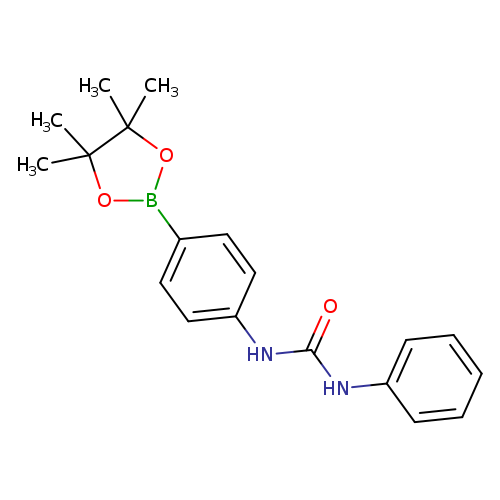
1-Phenyl-3-(4-(4,4,5,5-tetramethyl-1,3,2-dioxaborolan-2-yl)phenyl)ureaCatalog No.:AA00ID4X CAS No.:819056-67-2 MDL No.:MFCD15530088 MF:C19H23BN2O3 MW:338.2085 |
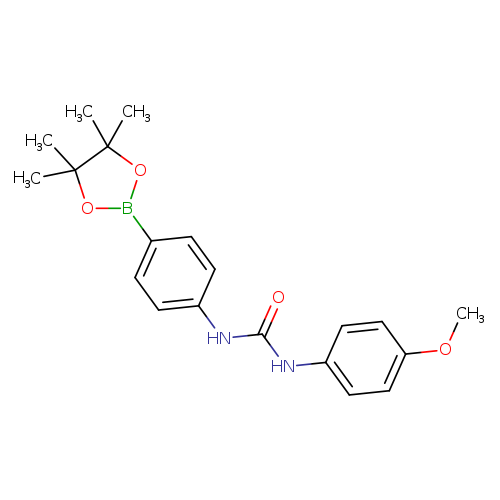
1-(4-Methoxyphenyl)-3-(4-(4,4,5,5-tetramethyl-1,3,2-dioxaborolan-2-yl)phenyl)ureaCatalog No.:AA00IEH4 CAS No.:874298-01-8 MDL No.:MFCD31561361 MF:C20H25BN2O4 MW:368.2345 |
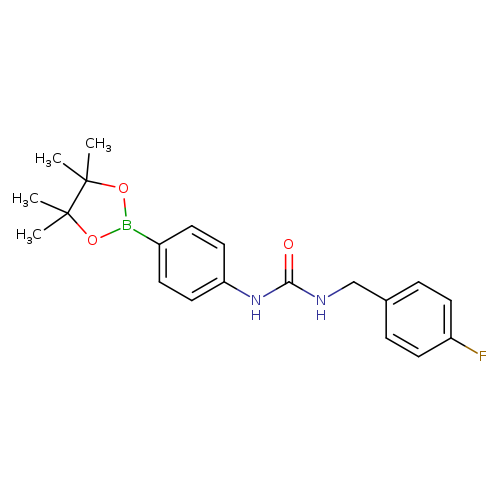
1-(4-Fluorobenzyl)-3-(4-(4,4,5,5-Tetramethyl-1,3,2-Dioxaborolan-2-Yl)Phenyl)UreaCatalog No.:AA00IEHE CAS No.:874298-25-6 MDL No.:MFCD22494669 MF:C20H24BFN2O3 MW:370.2256 |
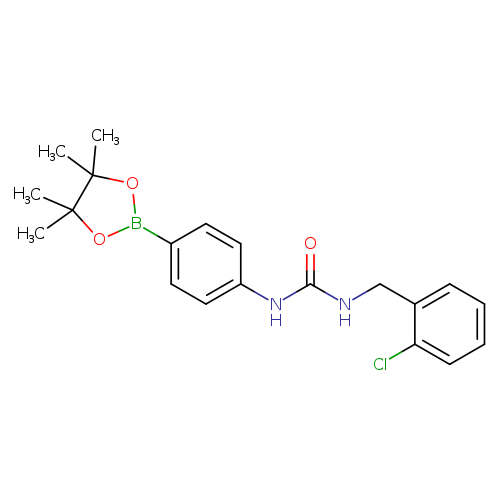
1-(2-Chlorobenzyl)-3-(4-(4,4,5,5-tetramethyl-1,3,2-dioxaborolan-2-yl)phenyl)ureaCatalog No.:AA00IEHM CAS No.:874298-90-5 MDL No.:MFCD22494709 MF:C20H24BClN2O3 MW:386.6802 |
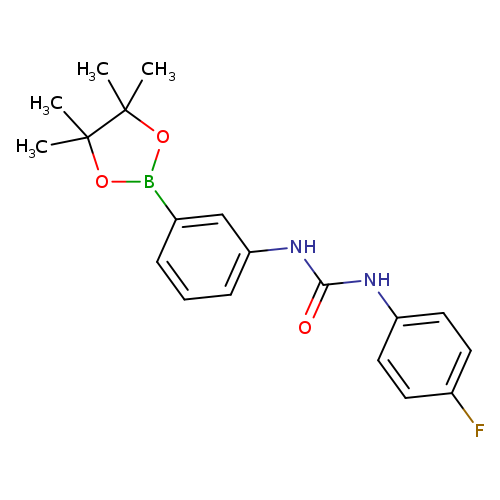
1-(4-fluorophenyl)-3-(3-(4,4,5,5-tetramethyl-1,3,2-dioxaborolan-2-yl)phenyl)ureaCatalog No.:AA00IEIA CAS No.:874301-65-2 MDL No.:MFCD22494545 MF:C19H22BFN2O3 MW:356.1990 |
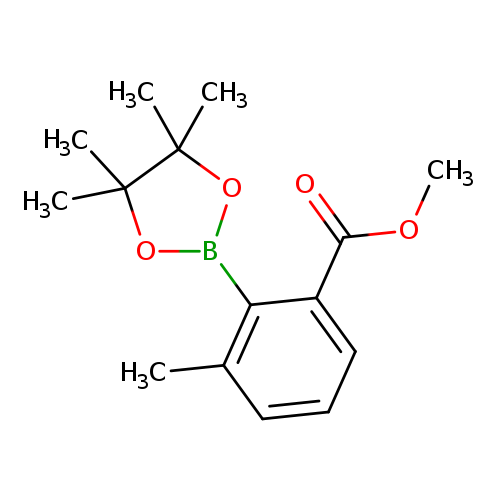
Methyl 3-methyl-2-(4,4,5,5-tetramethyl-1,3,2-dioxaborolan-2-yl)benzoateCatalog No.:AA00IF9X CAS No.:887234-98-2 MDL No.:MFCD16996352 MF:C15H21BO4 MW:276.1358 |
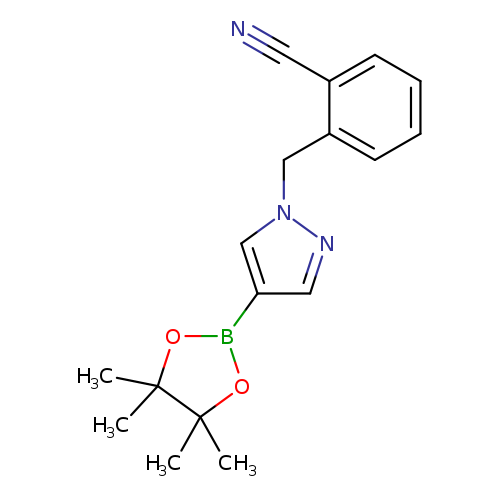
2-((4-(4,4,5,5-tetramethyl-1,3,2-dioxaborolan-2-yl)-1H-pyrazol-1-yl)methyl)benzonitrileCatalog No.:AA00IHDZ CAS No.:930596-18-2 MDL No.:MFCD21099760 MF:C17H20BN3O2 MW:309.1706 |
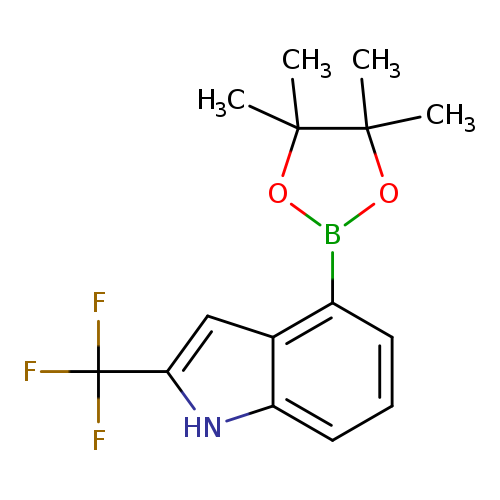
4-(4,4,5,5-Tetramethyl-1,3,2-dioxaborolan-2-yl)-2-(trifluoromethyl)-1H-indoleCatalog No.:AA00IJ50 CAS No.:955978-84-4 MDL No.:MFCD17215883 MF:C15H17BF3NO2 MW:311.1072 |