

2019-11-03 16:48:44
Masaki KAKIAGE1,³
1 Institute for Fiber Engineering, Shinshu University (IFES), Interdisciplinary Cluster for Cutting Edge Research (ICCER), Shinshu University, 3–15–1 Tokida, Ueda, Nagano 386–8567, Japan
1. Introduction
Carbothermal reduction is an important industrial process for the synthesis of non-oxide ceramic powders such as carbides, borides, and nitrides. The carbothermal reduction of boron oxide (B2O3) is the most common industrial manufacturing method for boron carbide (B4C) powder.1)3) The overall reaction of carbothermal reduction is given by

This process is suitable for large-scale synthesis because the starting materials, which include boric acid (H3BO3) or B2O3 as a boron source and activated carbon or petroleum coke as a carbon source, are inexpensive and nonhazardous. However, this process is conducted at a high temperature of approximately 2000°C. The volatilization loss of boron components is significant at the high synthesis
temperature. Furthermore, the obtained ingot must be crushed, refined, and granulated to produce B4C powder suitable for practical use. B4C exhibits extremely high hardness, and thus a large amount of energy is required for the pulverization process. Therefore, the development of a low-temperature synthetic route has been strongly expected for avoiding the volatilization loss of boron components
and reducing the manufacturing cost.
In order to reduce the synthesis temperature of B4C powder by carbothermal reduction, the B2O3 and carbon components must be dispersed well to increase the contact area between the B2O3 and carbon components and to reduce the diffusion distance of the reacting species. Many studies reported to synthesize B4C powder at lower temperatures by using a condensed product which employed
various organic compounds as a carbon source such as glycerin,4),5) citric acid,6)8) sugar,9),10) phenolic resin,11) and poly(vinyl alcohol) (PVA),12) and they could reduce the synthesis temperature to 15001600°C. However, in the case of heat treatment at lower temperatures of less than 1500°C, the product contained residual free carbon derived from the organic compound used as the raw material.
We have focused on both a molecular approach and a structural approach to further reduce the synthesis temperature of B4C powder without residual free carbon using a condensed H3BO3-polyol product.13)19) The compatibility of the composition, the dispersibility, and the homogeneity of the B2O3 and carbon components in a precursor was achieved by the combination of the bond-forming reaction between H3BO3 and a polyol and a thermal decomposition process in air (molecular approach). Furthermore, a finely and homogeneously arranged B2O3/carbon structure in the precursor leaded to a larger interface between the B2O3 and carbon components, enabling synthesis of B4C powder at a low temperature of 1200°C (structural approach).
2. Molecular approach: formation of B–O–C bond and compositional control by thermal decomposition in air
Carbothermal reduction using a condensed product as a precursor that consists of H3BO3 and an organic compound with a number of hydroxyl (OH) groups (a polyol) is attractive as a low-temperature synthetic method for B4C. A condensed H3BO3polyol product forms a borate ester(BOC) bond by a dehydration condensation reaction between H3BO3 and the polyol [Fig. 1(a)].20) The formation of this bond leads to the homogeneous dispersion of the boron source and carbon source at the molecular level, and thus the synthesis temperature is reduced owing to the increased surface-active area between the B2O3 and carbon components with superior reactivity. We used glycerin(C3H8O3),14),19) mannitol (C6H14O6),16) or PVA13),15),18) as a polyol that has a strong complexation ability and can easily
form a BOC bond with H3BO3.) Expected molecular structures of a condensed H3BO3-glycerin product,5) a condensed H3BO3-mannitol product,20) and a condensed H3BO3PVA product are shown in Fig. 1. However, the obtained product contained a large amount of residual carbon derived from the polyol, which is a common disadvantage of B4C synthesis using an organic compound, since a condensed product has excessively large carbon component compared with that required for carbothermal reduction. In previous research,8),10) an excessive amount of H3BO3 was used as a raw material to prevent the formation of residual free carbon in the product. However, the homogeneity was low for the condensed product prepared

with excess H3BO3, which contained an isolated H3BO3 component without a BOC bond.16) Therefore, the simultaneous pursuit of dispersibility and compositional control of a condensed product contains a major contradiction. In an attempt to resolve the above contradiction, we performed the thermal decomposition in air before the carbothermal reduction of a condensed H3BO3-polyol product prepared at the stoichiometric ratio for the dehydration condensation to control the amount of carbon to the stoichiometric C/B2O3 ratio required for the carbothermal reduction given by Eq. (1) (C/B2O3 = 3.5). The thermal decomposition in air eliminates the excess carbon component while maintaining the dispersibility. Figure 2 shows X-ray diffraction (XRD) patterns of the products obtained by heat treatment at 1250°C for 5 h in an Ar flow of thermally decomposed products (precursor powders) prepared from the condensed H3BO3-mannitol product by thermal decomposition at (a) 300500°C for 2 h and (b) 400°C for 14 h in air.16) The XRD patterns changed systematically with the thermal decomposition temperature[Fig. 2(a)] and holding time [Fig. 2(b)]. A peak attributed to amorphous carbon was observed at lower thermal decomposition temperatures or for shorter holding times, indicating that the precursor had excess carbon, and peaks attributed to B2O3 were observed at higher thermal decomposition temperatures or for longer holding times, indicating that the precursor had excess B2O3. Note that the structural homogeneity of the condensed H3BO3-mannitol product dominated the B4C formation behavior at a low synthesis temperature (see Figs. 11 and 12 in Ref. 16). The formation of B4C was induced simultaneously within a short time throughout the entire homogeneous precursor (the thermally decomposed product prepared from the condensed product with the stoichiometric ratio for the dehydration condensation) even at a low synthesis temperature. In contrast, widely spaced B2O3 and carbon components, which have less reactivity, existed in the heterogeneous precursor (the condensed product prepared with excess H3BO3, which contained an isolated H3BO3 component without a BOC bond). The heterogeneity of the synthesis reaction, which reflects the structural heterogeneity, resulted in a time lag in the complete formation of B4C, particularly at a low synthesis temperature.16)
Consequently, the low-temperature synthesis of crystalline B4C powder with little free carbon was achieved by carbothermal reduction using a condensed H3BO3-polyol product with a highly and homogeneously dispersed structure and a suitable C/B2O3 composition. The C/B2O3 composition of the precursor can be controlled by varying the thermal decomposition conditions in air.
3. Structural approach: morphological control of B2O3/carbon microstructure in precursor
The formation reaction of B4C from a condensed H3BO3-polyol product is carbothermal reduction, i.e., the reaction of B2O3 and carbon [Eq. (1)]. Hence, we propose an approach to developing lower-temperature synthesis routes by clarifying in detail the relation between the

precursor structure (B2O3/carbon structure) and the formation of B4C. A thermally decomposed product consisting of B2O3 and carbon components (B4C precursor) was prepared from a condensed H3BO3-polyol product by thermal decomposition in air. Within the obtained precursor prepared from the condensed H3BO3-polyol product under suitable conditions, a three-dimensional networked carbon structure with a homogeneous B2O3/carbon arrangement at the nanometer scale was spontaneously formed. Figure 3 shows scanning electron microscope (SEM) images of the precursors prepared from (a, b) the condensed H3BO3-glycerin product14) and (c, d) the condensed H3BO3PVA product.15) The B2O3 component can be removed by washing the precursor powder in hot water, thus leaving the carbon component, as shown in Figs. 3(b) and 3(d). A characteristic carbon network structure with nano-order spacing can be recognized for both precursors. A threedimensional bicontinuous structure composed of B2O3 and carbon components was formed for the condensed H3BO3-glycerin product [Fig. 3(b)]. On the other hand, nanosize B2O3 particles were dispersed in a carbon matrix for the
condensed H3BO3PVA product [Fig. 3(d)]. The B2O3/ carbon microstructure is beneficial for the low-temperature carbothermal reduction of B2O3, coupled with the dispersibility of the boron and carbon sources. The formation of a homogeneously arranged B2O3/carbon structure at the nanometer scale contributes to its markedly increased contact area without the powder compaction of the raw materials.
Furthermore, the networked carbon structure prevents the aggregation of molten B2O3 liquid (melting point: 450°C) during the heat treatment, leading to an enlarged surface-active area and the efficient removal of
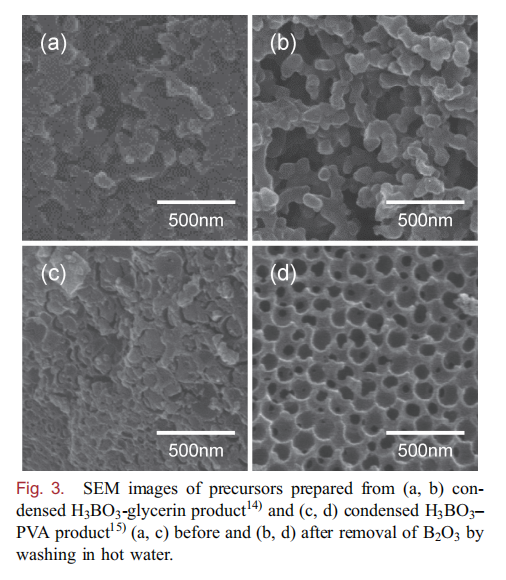
the byproduct CO gas. Therefore, the synthesis temperature is expected to be lowered by improving the dispersion state of the B2O3 and carbon components owing to the increased surface-active area between the B2O3 and carbon components, resulting in higher reactivity. The precursor prepared from the condensed H3BO3-glycerin product formed a characteristic three-dimensional bicontinuous structure composed of B2O3 and carbon
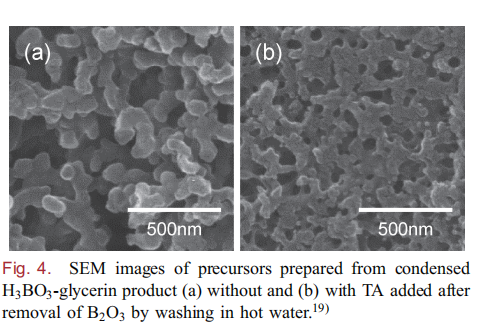
components [Fig. 3(b)]. Glycerin is an organic solvent of low molecular weight; thus, homogeneous blending can be easily achieved with an organic compound. Therefore, we attempted to further develop the precursor structure by the multicomponent blending of organic compounds to obtain a precursor with a more homogenously and finely dispersed B2O3/carbon structure derived from the condensed H3BO3-glycerin product.19) Tartaric acid (C4H6O6, TA) was adopted as the organic compound added to the condensed H3BO3-glycerin product because of its two hydroxyl and two carboxyl groups, low molecular weight, and solubility in glycerin. Figure 4 shows SEM images of the precursors prepared from the condensed H3BO3-glycerin product (a) without and (b) with TA added after the removal of B2O3 by washing in hot water.19) The precursor prepared from the condensed H3BO3-glycerin product with TA added [Fig. 4(b)] had a more homogeneously and finely dispersed bicontinuous B2O3/carbon
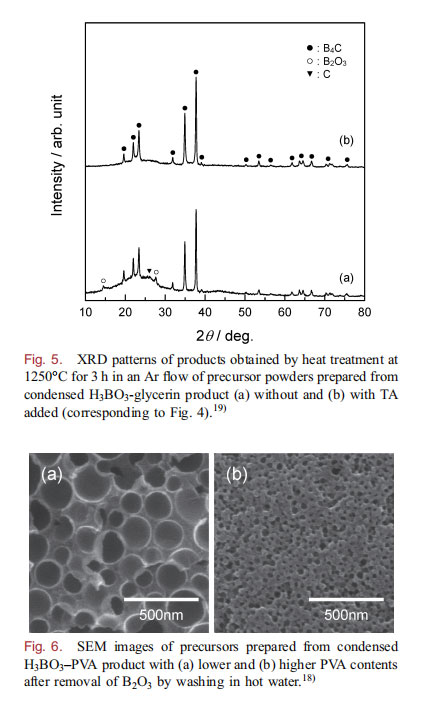
structure. This is because the hydroxyl groups enabled the chemical structure of the complex condensed product to be continuously formed, and the carboxyl groups separated the H3BO3 parts. Figure 5 shows XRD patterns of the products obtained by heat treatment of these precursor powders at 1250°C for 3 h in an Ar flow.19) The complete formation of crystalline B4C powder was achieved at 1250°C within a shorter heat treatment time for the precursor with a fine dispersion state [Fig. 4(b)] because the diffusion of reacting species became easier with increasing contact area of the B2O3 and carbon components.
The morphology of the precursor obtained by the thermal decomposition of the condensed H3BO3PVA product in air consisted of B2O3 particles dispersed in a carbon matrix [Fig. 3(d)], which is similar to the sea-island structure of a polymer alloy. It is known that the phaseseparated morphology of a polymer alloy is related to the volume fraction of each component. Furthermore, the number of hydroxyl groups, which react with H3BO3, increases with increasing PVA content, increasing the dispersion of H3BO3. Thus, we considered the effect of the PVA content of the condensed H3BO3PVA product on the
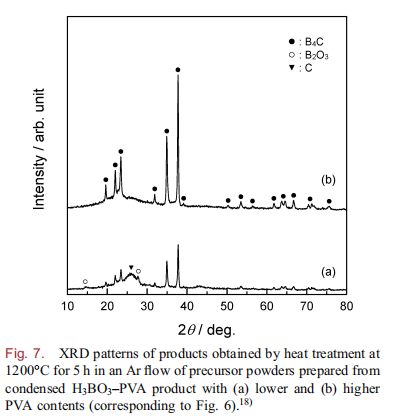
microstructure in the precursor and the formation of B4C at a low synthesis temperature.18) Figure 6 shows SEM images of the precursors prepared from the condensed
H3BO3PVA product with (a) lower and (b) higher PVA contents after the removal of B2O3 by washing in hot water.18) The dispersibility of B2O3 particles in the carbon matrix markedly improved with increasing PVA content of the condensed product. H3BO3 molecules were more finely dispersed in the network of the condensed product with increasing PVA content. Consequently, the aggregation of B2O3 was suppressed and a precursor having a finely and homogeneously dispersed structure was fabricated. Figure 7 shows XRD patterns of the products obtained by heat treatment of these precursor powders at 1200°C for 5 h in an Ar flow.18) Crystalline B4C powder with little free carbon was synthesized at 1200°C for 5 h from the precursor with a more finely and homogeneously dispersed structure [Fig. 6(b)], which is the lowest temperature reported for the synthesis of B4C powder by carbothermal reduction. These results demonstrate that the synthesis temperature and holding time can be reduced
by using a precursor with a finely and homogeneously dispersed B2O3/carbon structure because the diffusion of the reacting species became easier with increasing contact area of the B2O3 and carbon components and decreasing diffusion distance of the reacting species.
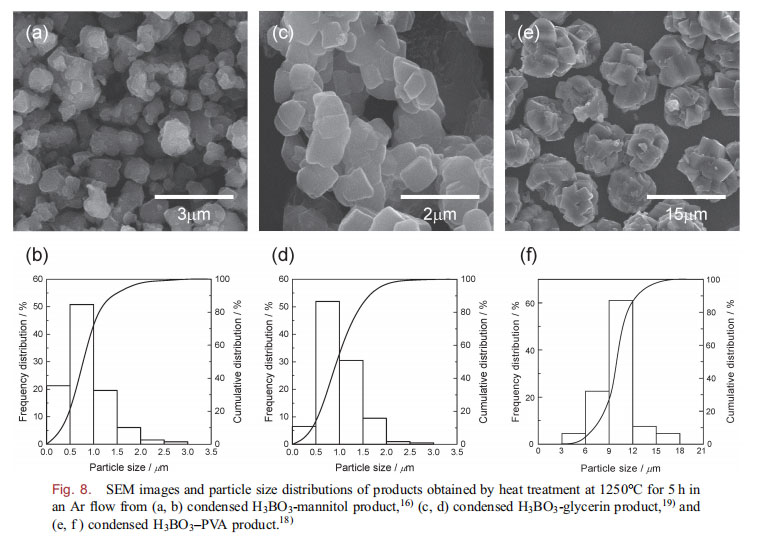
Figure 8 shows SEM images and particle size distributions of the products obtained by heat treatment at 1250°C for 5 h in an Ar flow from (a, b) the condensed H3BO3-mannitol product,16) (c, d) the condensed H3BO3-glycerin product,19) and (e, f ) the condensed H3BO3PVA prod-
uct.18) B4C powder was obtained without a postgrinding process in each case. Interestingly, the particle size differs according to the polyol used. Fine B4C powder with submicrometer-size particles was obtained for the products prepared using mannitol (D50 = 0.8 ¯m) and glycerin (D50 = 0.9 ¯m). On the other hand, the grain growth of B4C particles was observed for the product prepared using
PVA (D50 = 10.0 ¯m). This result implies that the structural morphology of the precursor affected the morphology of the B4C particles.17)
4. Application to low-temperature synthesis of other boride powders: BN and CaB6 powders
Boron nitride (BN) powder is obtained by the heat treatment of a compacted B2O3-carbon mixture (pellet) in a N2 flow (carbothermal nitridation),22)25) for which the overall reaction is given by

The B2O3/carbon structure is beneficial for the lowtemperature synthesis of BN powder by carbothermal nitridation using N2 gas. The contact area of the B2O3, carbon, and N2 gas components is much larger than that obtained by conventional powder compaction. Furthermore, the networked carbon structure prevents the spread of molten B2O3 liquid. Figure 9 shows XRD patterns of the products obtained by heat treatment of the precursor powder prepared from the condensed H3BO3PVA product and the directly mixed powder consisting of B2O3 and

activated carbon at 1200°C for 10 h in a N2 flow.26) The BN formation was accelerated for the product obtained from the precursor powder, which had a finely dispersed B2O3/carbon structure. This demonstrates that the formation of the B2O3/carbon structure is effective for the lowtemperature carbothermal nitridation. Calcium hexaboride (CaB6) powder is synthesized under vacuum at above 1400°C using calcium carbonate(CaCO3), B4C, and carbon powders as starting materials(B4C method).27)29) On the other hand, the formation of CaB6 by carbothermal reduction without the use of B4C
requires a high synthesis temperature of above 1700°C.30)
Note that this process includes the transient formation of B4C. Here, the formation temperature of B4C is high(above 1500°C), suggesting that the transient formation of B4C is the rate-determining step in this process. Thus, we propose a new low-temperature synthesis approach for CaB6 powder without the use of B4C as a raw material by the carbothermal reduction of a calcium oxide (CaO) B2O3C system [Eq. (3)] using the above-mentioned lowtemperature synthesis method for B4C powder.31),32)

Figure 10 shows XRD patterns of the products obtained by heat treatment of a mixture of the thermally decomposed product prepared from the condensed H3BO3PVA product and CaCO3 powder and the directly mixed powder consisting of CaCO3, B2O3, and activated carbon at 1400°C for 5 h in an Ar flow.31) Peaks attributed to CaB6 were observed only for the product obtained using the thermally decomposed product, indicating that the B2O3/carbon structure is essential for the formation of CaB6 at a lower temperature. The transient formation of B4C occurred at a low temperature of 1200°C.31),32) CaB6 was formed via the transient formation of calcium borate(Ca3B2O6) and B4C,31),32) and CaB6 powder with fine particles was synthesized by heat treatment at 1400°C for 3 h in an Ar flow.32) These results demonstrate that the B2O3/carbon structure prepared from a condensed H3BO3-polyol product by thermal decomposition in air is a suitable precursor for the low-temperature synthesis of boride powders by carbothermal reduction.
5. Summary
In this review, our approach to the low-temperature synthesis of boride powders, i.e., B4C, BN, and CaB6 powders, by controlling the B2O3/carbon microstructure in the precursor using a condensed H3BO3-polyol product was outlined. We focused on the formation of a BOC bond by the dehydration condensation of H3BO3 and a polyol and the formation of the B2O3/carbon structure by the thermal decomposition of a condensed product in air.
The dispersion morphology of the B2O3/carbon structure is the main factor determining the synthetic process of B4C powder. The improved dispersibility and homogeneity of the B2O3/carbon microstructure was conducive to the accelerated B4C formation at lower temperatures, and the low-temperature synthesis of crystalline B4C powder with little free carbon was achieved. This approach is a promising methodology for the low-temperature synthesis of boride powders by carbothermal reduction.
Acknowledgements The author expresses his sincere gratitude to Professor Hidehiko Kobayashi and Associate Professor Ikuo Yanase (Saitama University) for their continuous support. The author also acknowledges students for their contributions to this work. This work was partly supported by a Grant-in-Aid for Young Scientists (B) (JP24750198 and JP16K21067) from the Japan Society for the Promotion of Science (JSPS), Sasakawa Scientific Research Grant from The Japan Science Society, and Nippon Sheet Glass Foundation for Materials Science and Engineering.
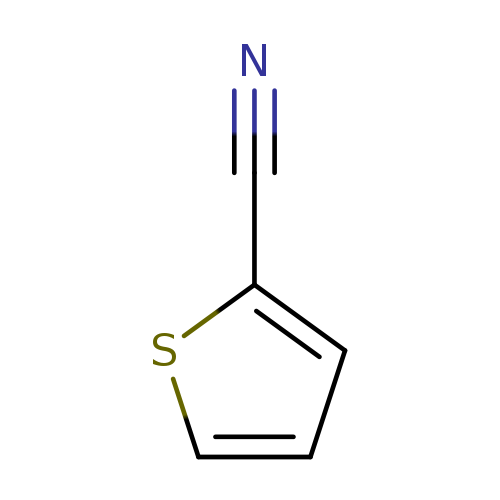
2-ThiophenecarbonitrileCatalog No.:AA0001EQ CAS No.:1003-31-2 MDL No.:MFCD00005416 MF:C5H3NS MW:109.1490 |
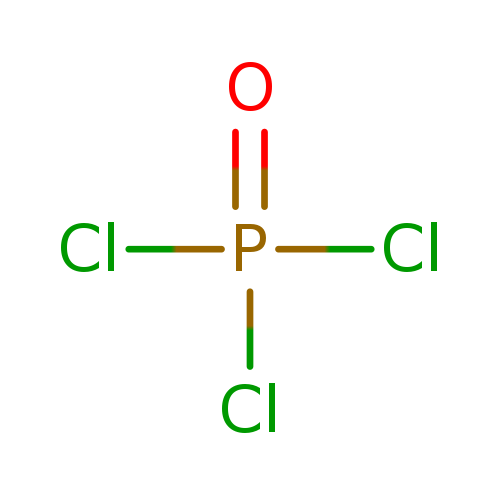
Phosphoric trichlorideCatalog No.:AA0001BP CAS No.:10025-87-3 MDL No.:MFCD00011443 MF:Cl3OP MW:153.3322 |
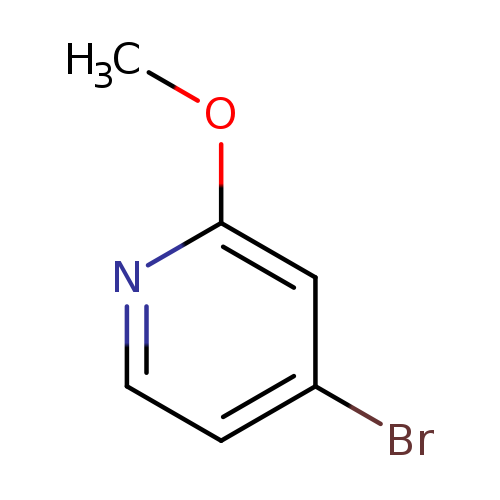
4-Bromo-2-methoxypyridineCatalog No.:AA0001O2 CAS No.:100367-39-3 MDL No.:MFCD08277268 MF:C6H6BrNO MW:188.0219 |
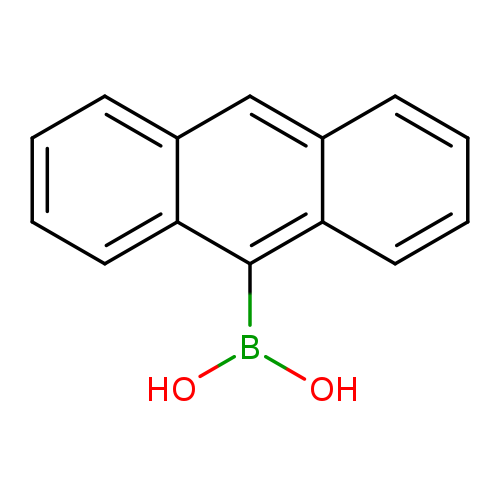
9-Anthraceneboronic acidCatalog No.:AA0002G2 CAS No.:100622-34-2 MDL No.:MFCD03425925 MF:C14H11BO2 MW:222.0469 |
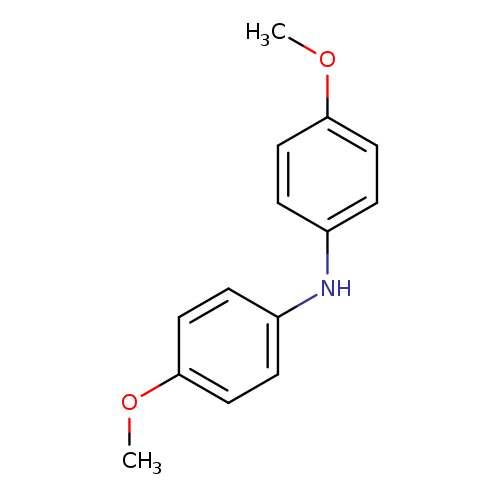
Bis(4-methoxyphenyl)amineCatalog No.:AA0003D7 CAS No.:101-70-2 MDL No.:MFCD00014895 MF:C14H15NO2 MW:229.2744 |
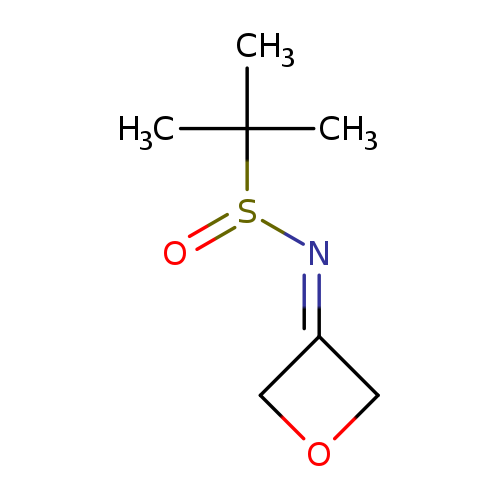
2-Methyl-N-(oxetan-3-ylidene)propane-2-sulfinamideCatalog No.:AA000GSY CAS No.:1158098-73-7 MDL No.:MFCD14702522 MF:C7H13NO2S MW:175.2486 |
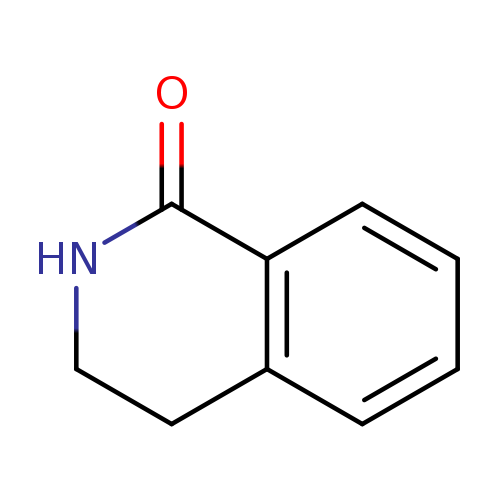
3,4-Dihydroisoquinolin-1(2H)-oneCatalog No.:AA000P5U CAS No.:1196-38-9 MDL No.:MFCD00853963 MF:C9H9NO MW:147.1739 |
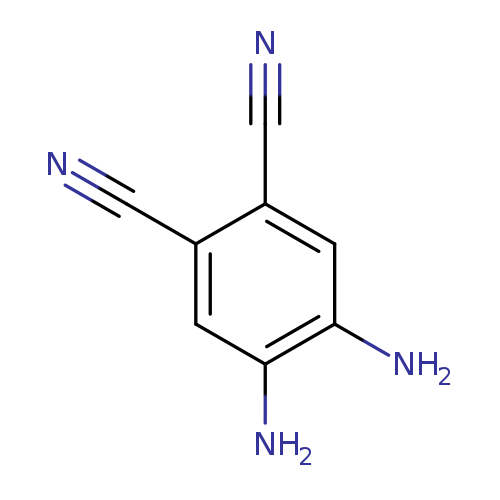
4,5-DiaminophthalonitrileCatalog No.:AA000Z11 CAS No.:129365-93-1 MDL No.:MFCD02376082 MF:C8H6N4 MW:158.1600 |
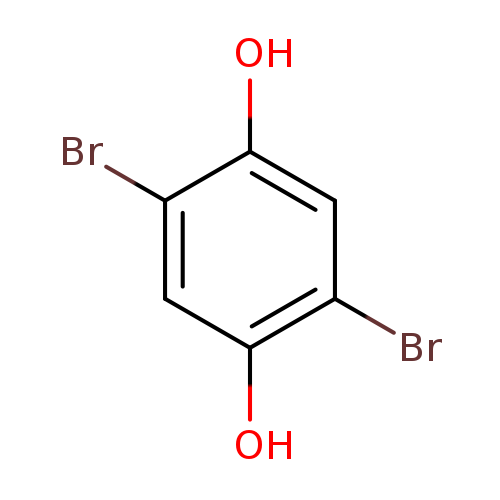
2,5-Dibromobenzene-1,4-diolCatalog No.:AA001EVS CAS No.:14753-51-6 MDL No.:MFCD00192664 MF:C6H4Br2O2 MW:267.9028 |
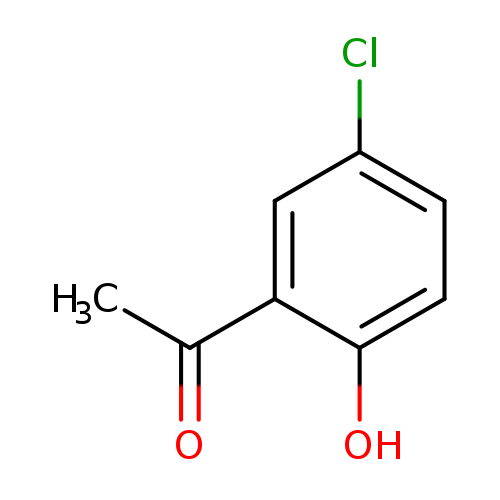
Ethanone, 1-(5-chloro-2-hydroxyphenyl)-Catalog No.:AA001KDJ CAS No.:1450-74-4 MDL No.:MFCD00067788 MF:C8H7ClO2 MW:170.5930 |
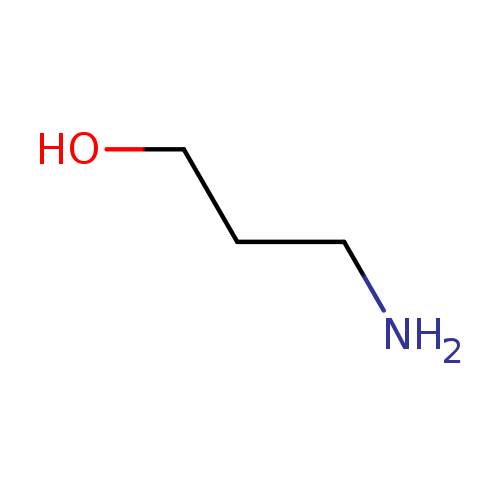
3-Aminopropan-1-olCatalog No.:AA001OC3 CAS No.:156-87-6 MDL No.:MFCD00008223 MF:C3H9NO MW:75.1097 |
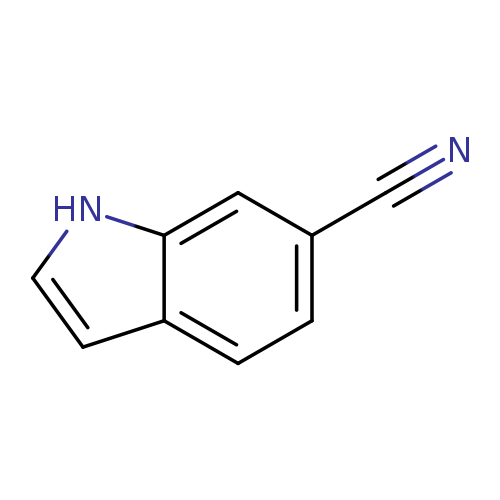
6-CyanoindoleCatalog No.:AA001Q9N CAS No.:15861-36-6 MDL No.:MFCD00016732 MF:C9H6N2 MW:142.1573 |
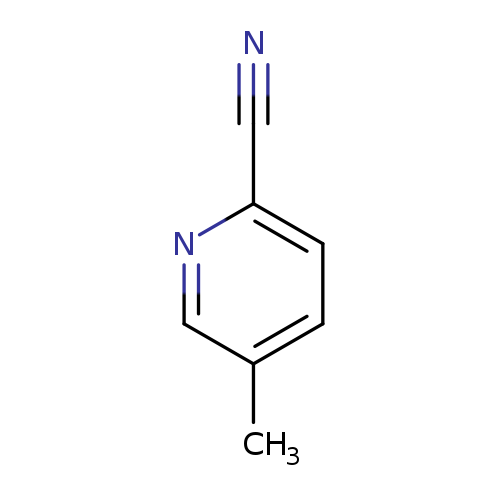
2-Cyano-5-methylpyridineCatalog No.:AA001SJ4 CAS No.:1620-77-5 MDL No.:MFCD06200830 MF:C7H6N2 MW:118.1359 |
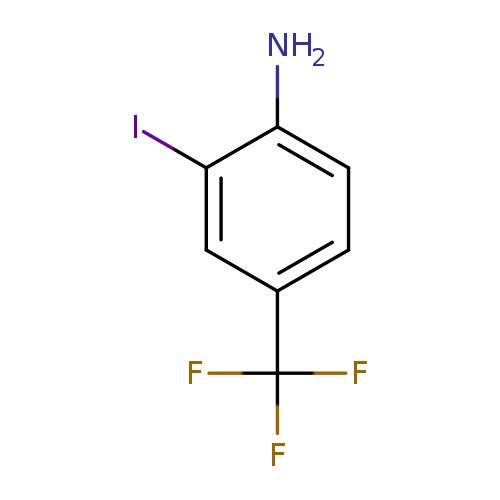
2-Iodo-4-(trifluoromethyl)anilineCatalog No.:AA001U1G CAS No.:163444-17-5 MDL No.:MFCD02683097 MF:C7H5F3IN MW:287.0210 |
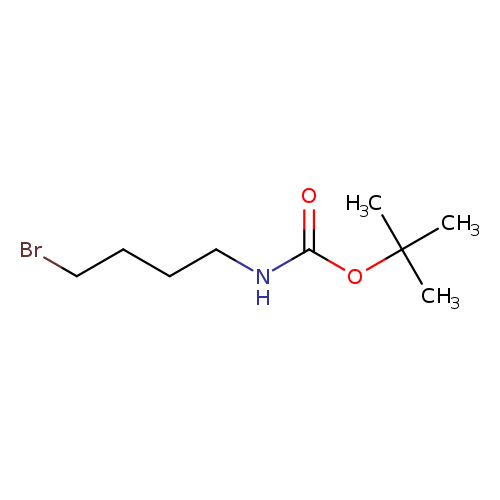
4-(Boc-amino)butyl BromideCatalog No.:AA001URG CAS No.:164365-88-2 MDL No.:MFCD06201020 MF:C9H18BrNO2 MW:252.1487 |
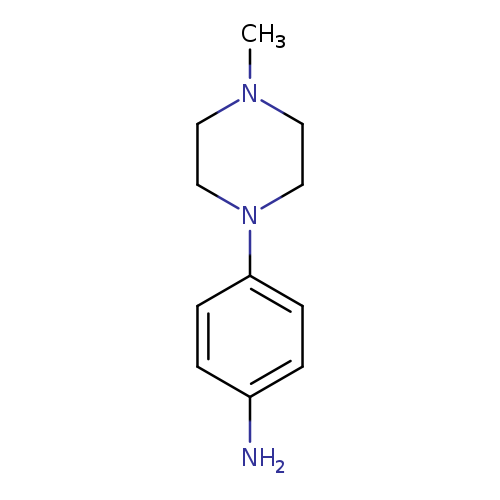
4-(4-Methylpiperazin-1-yl)phenylamineCatalog No.:AA001VL9 CAS No.:16153-81-4 MDL No.:MFCD00021818 MF:C11H17N3 MW:191.2728 |
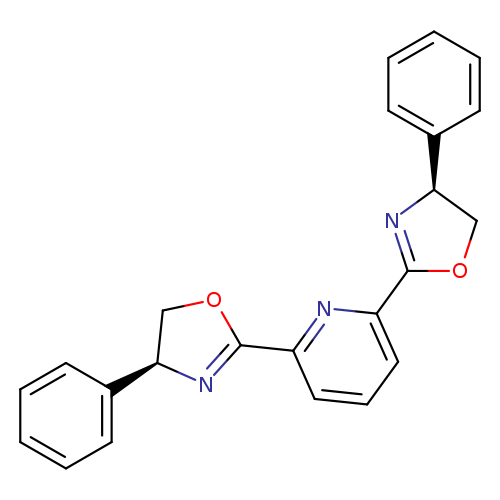
2,6-Bis((S)-4-phenyl-4,5-dihydrooxazol-2-yl)pyridineCatalog No.:AA001ZN9 CAS No.:174500-20-0 MDL No.:MFCD01863586 MF:C23H19N3O2 MW:369.4159 |
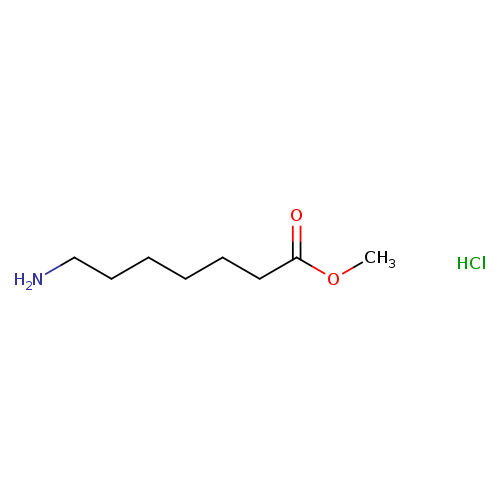
Methyl 7-aminoheptanoate hydrochlorideCatalog No.:AA0021E7 CAS No.:17994-94-4 MDL No.:MFCD09029389 MF:C8H18ClNO2 MW:195.6870 |
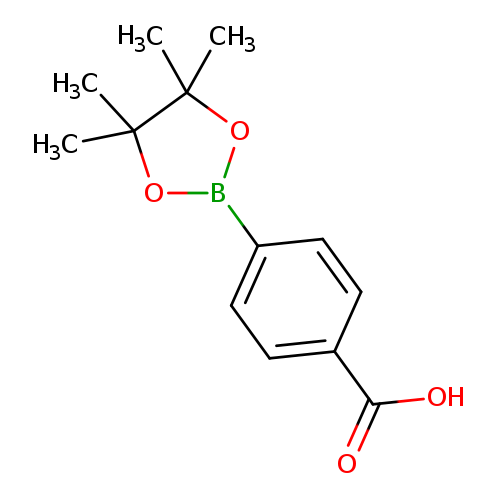
4-(4,4,5,5-Tetramethyl-1,3,2-dioxaborolan-2-yl)benzoic acidCatalog No.:AA0021ZJ CAS No.:180516-87-4 MDL No.:MFCD01863710 MF:C13H17BO4 MW:248.0827 |
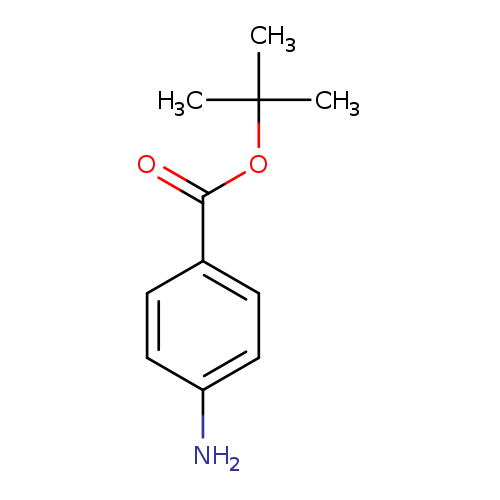
Benzoic acid, 4-amino-, 1,1-dimethylethyl esterCatalog No.:AA0022TI CAS No.:18144-47-3 MDL No.:MFCD00665790 MF:C11H15NO2 MW:193.2423 |
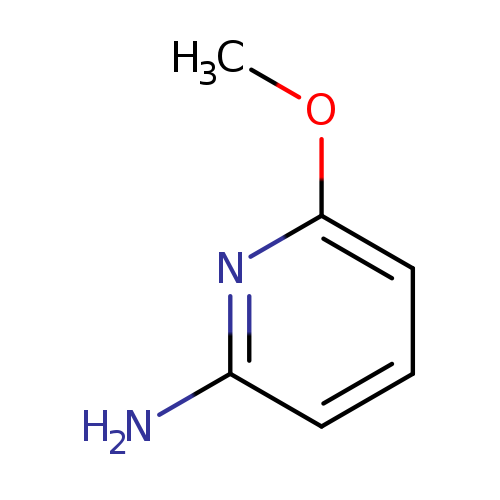
2-Amino-6-methoxypyridineCatalog No.:AA0026S8 CAS No.:17920-35-3 MDL No.:MFCD04972542 MF:C6H8N2O MW:124.1405 |
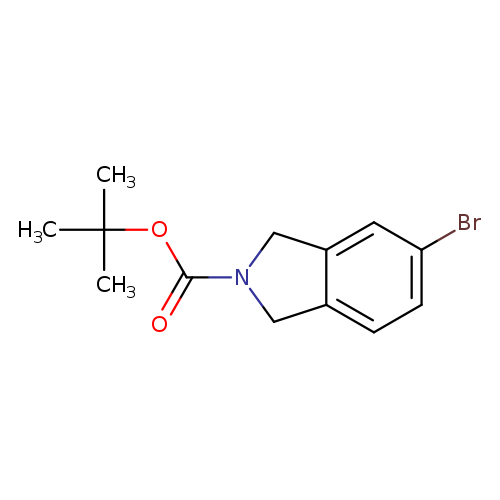
N-Boc-5-bromoisoindolineCatalog No.:AA0027U4 CAS No.:201940-08-1 MDL No.:MFCD09953049 MF:C13H16BrNO2 MW:298.1756 |
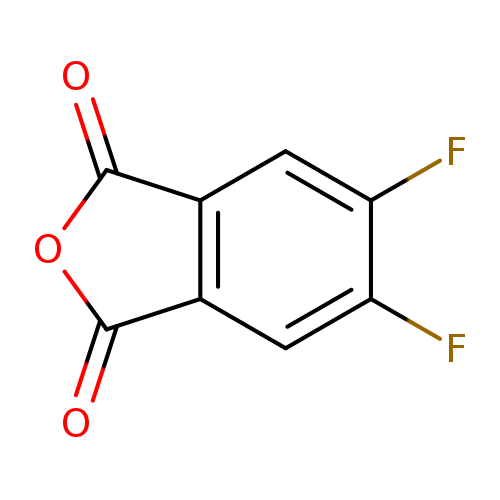
5,6-Difluoroisobenzofuran-1,3-dioneCatalog No.:AA002DPN CAS No.:18959-30-3 MDL No.:MFCD11858579 MF:C8H2F2O3 MW:184.0965 |
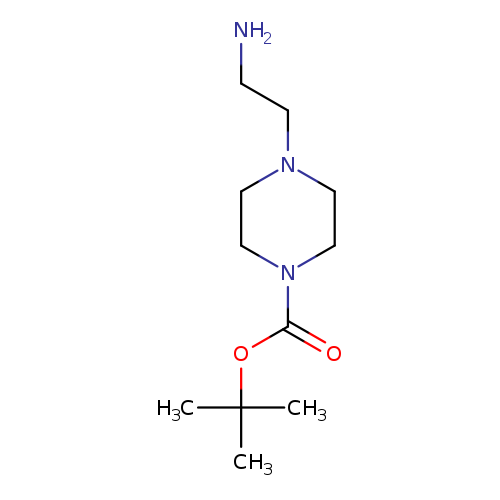
1-Piperazinecarboxylic acid, 4-(2-aminoethyl)-, 1,1-dimethylethyl esterCatalog No.:AA002FLQ CAS No.:192130-34-0 MDL No.:MFCD02683049 MF:C11H23N3O2 MW:229.3192 |
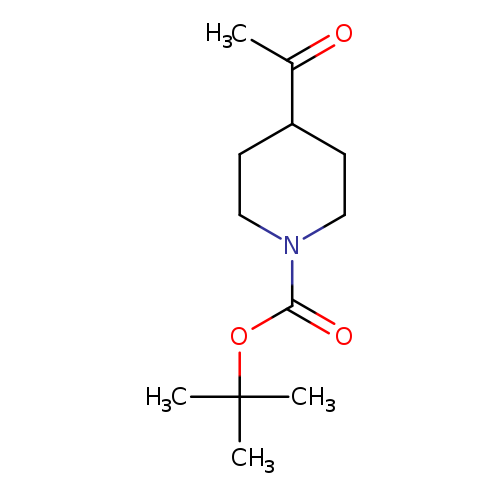
Tert-Butyl 4-acetylpiperidine-1-carboxylateCatalog No.:AA002IPI CAS No.:206989-61-9 MDL No.:MFCD08437655 MF:C12H21NO3 MW:227.3000 |
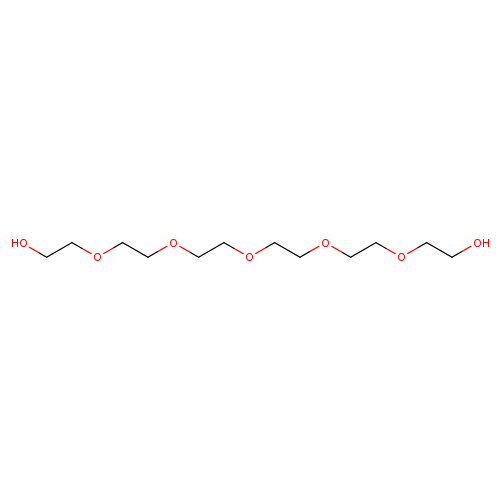
Hexaethylene GlycolCatalog No.:AA002RSK CAS No.:2615-15-8 MDL No.:MFCD00002877 MF:C12H26O7 MW:282.3306 |
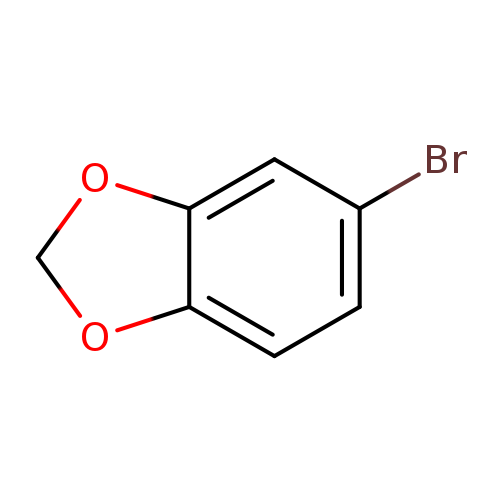
5-Bromobenzo[d][1,3]dioxoleCatalog No.:AA002SS3 CAS No.:2635-13-4 MDL No.:MFCD00005821 MF:C7H5BrO2 MW:201.0174 |
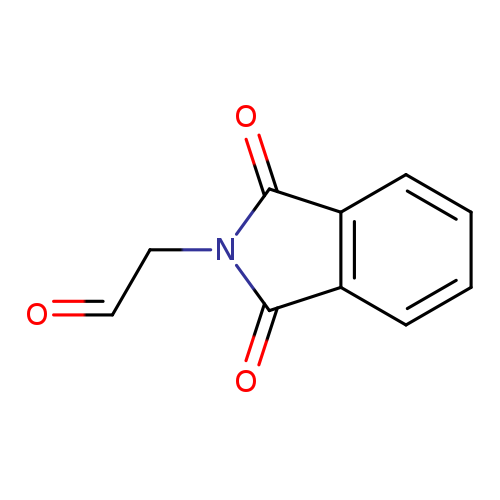
N-(2-Oxoethyl)phthalimideCatalog No.:AA002XCS CAS No.:2913-97-5 MDL No.:MFCD00023080 MF:C10H7NO3 MW:189.1675 |
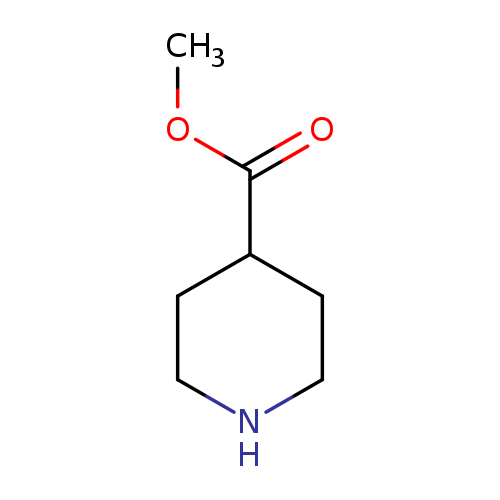
Methyl isonipecotateCatalog No.:AA002Z3K CAS No.:2971-79-1 MDL No.:MFCD00190578 MF:C7H13NO2 MW:143.1836 |
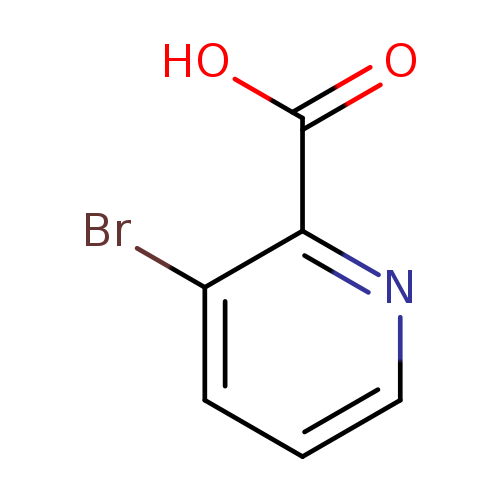
2-Pyridinecarboxylic acid, 3-bromo-Catalog No.:AA0030PX CAS No.:30683-23-9 MDL No.:MFCD01320380 MF:C6H4BrNO2 MW:202.0055 |
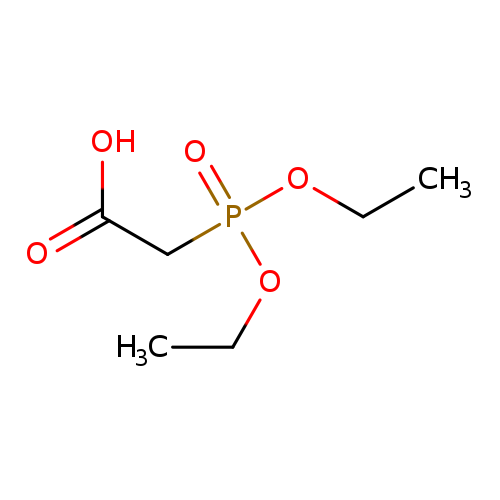
2-(Diethoxyphosphinyl)acetic acidCatalog No.:AA0031NX CAS No.:3095-95-2 MDL No.:MFCD00192032 MF:C6H13O5P MW:196.1382 |
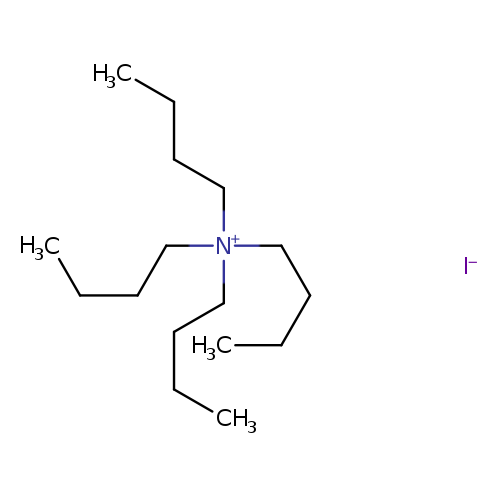
Tetra-n-butylammonium iodideCatalog No.:AA003224 CAS No.:311-28-4 MDL No.:MFCD00011636 MF:C16H36IN MW:369.3682 |
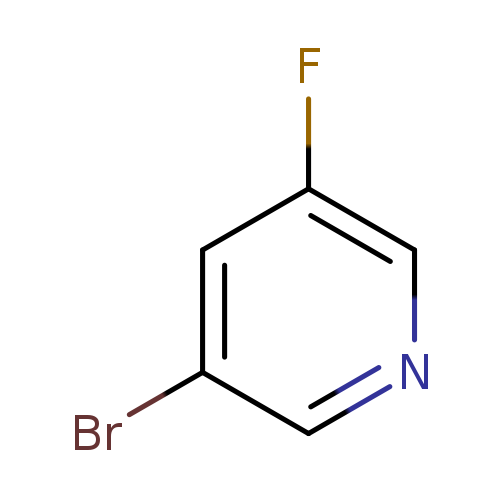
3-Bromo-5-fluoropyridineCatalog No.:AA00327J CAS No.:407-20-5 MDL No.:MFCD04112555 MF:C5H3BrFN MW:175.9864 |
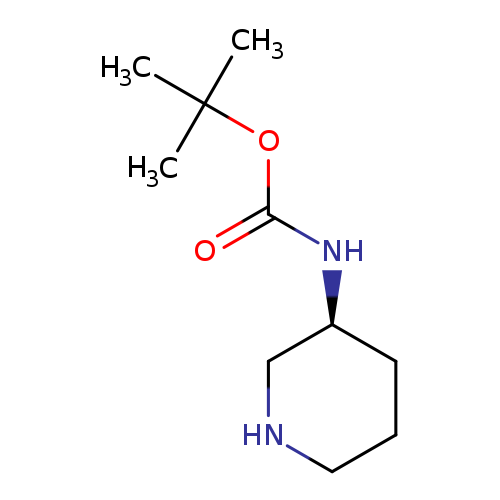
(S)-3-N-Boc-aminopiperidineCatalog No.:AA0032EE CAS No.:216854-23-8 MDL No.:MFCD03093383 MF:C10H20N2O2 MW:200.2780 |
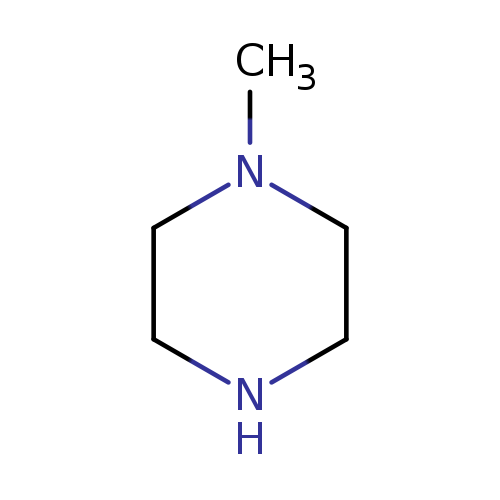
1-MethylpiperazineCatalog No.:AA0032QJ CAS No.:109-01-3 MDL No.:MFCD00005966 MF:C5H12N2 MW:100.1622 |
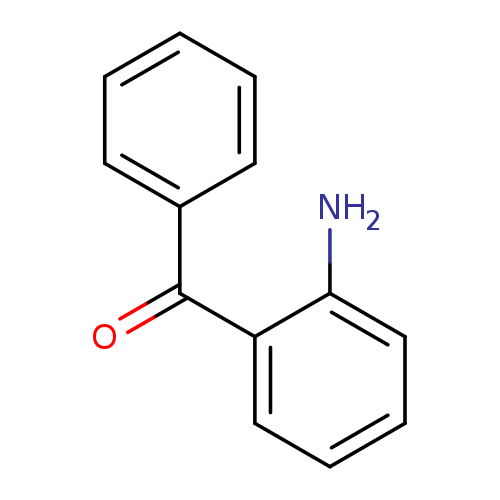
2-AminobenzophenoneCatalog No.:AA00331A CAS No.:2835-77-0 MDL No.:MFCD00007713 MF:C13H11NO MW:197.2325 |
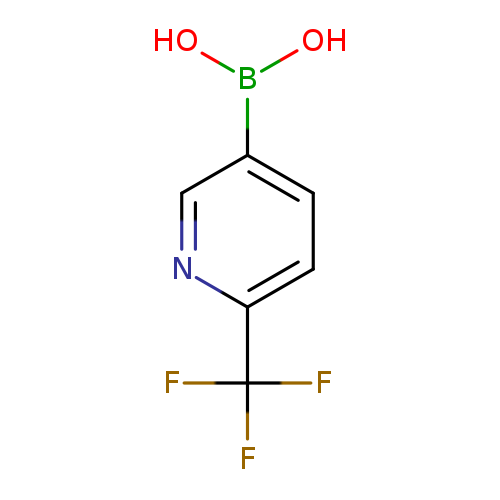
2-Trifluoromethyl-5-Pyridineboronic AcidCatalog No.:AA0033DA CAS No.:868662-36-6 MDL No.:MFCD07375381 MF:C6H5BF3NO2 MW:190.9156 |
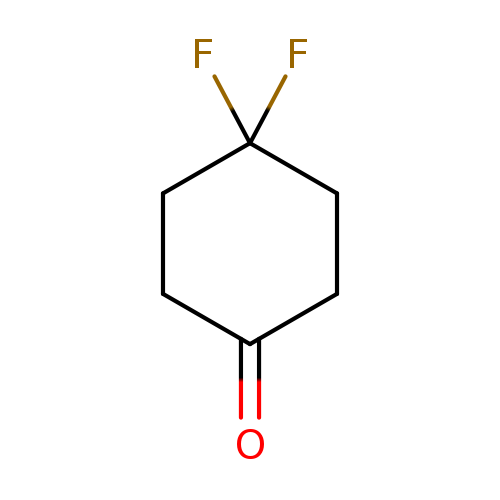
4,4-DifluorocyclohexanoneCatalog No.:AA0033S2 CAS No.:22515-18-0 MDL No.:MFCD08146635 MF:C6H8F2O MW:134.1239 |
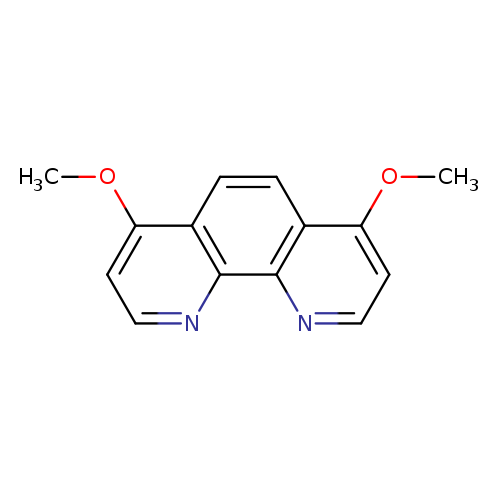
4,7-Dimethoxy-1,10-phenanthrolineCatalog No.:AA0033ST CAS No.:92149-07-0 MDL No.:MFCD00233883 MF:C14H12N2O2 MW:240.2573 |
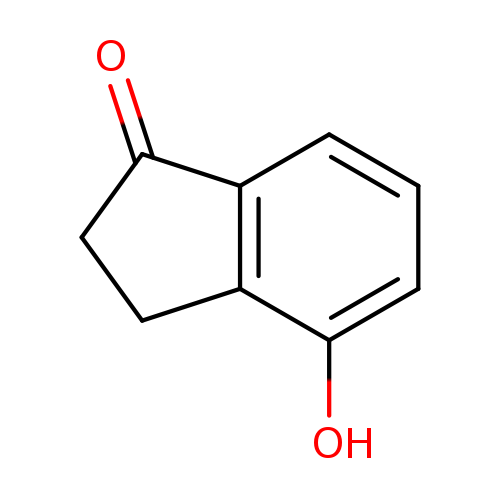
4-HydroxyindanoneCatalog No.:AA0033ZJ CAS No.:40731-98-4 MDL No.:MFCD00143330 MF:C9H8O2 MW:148.1586 |
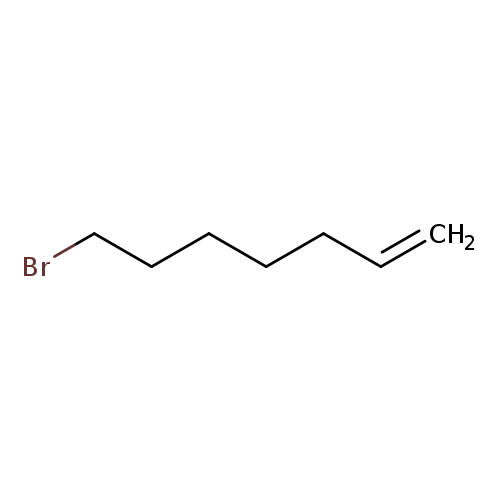
7-Bromo-1-hepteneCatalog No.:AA0034B4 CAS No.:4117-09-3 MDL No.:MFCD01631137 MF:C7H13Br MW:177.0821 |
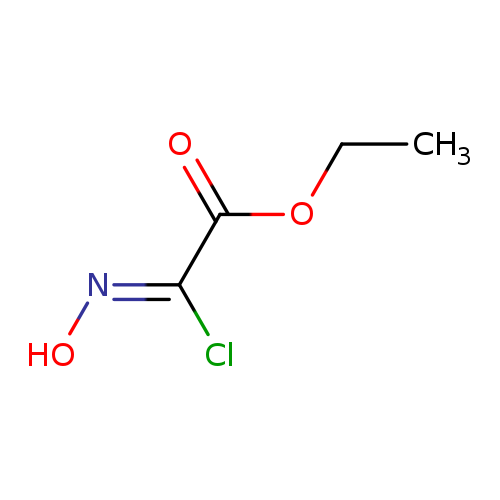
Ethyl 2-Chloro-2-(hydroxyimino)acetateCatalog No.:AA0034RM CAS No.:14337-43-0 MDL No.:MFCD00010209 MF:C4H6ClNO3 MW:151.5483 |
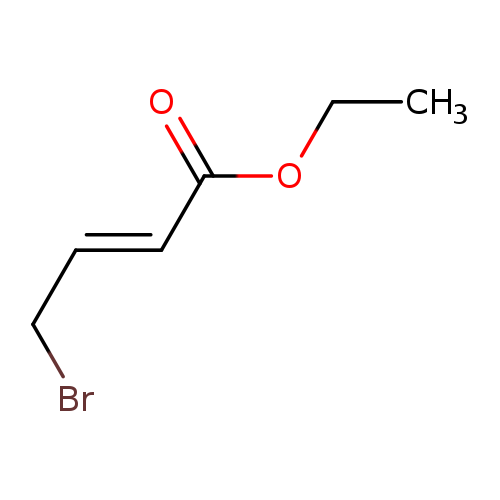
Ethyl trans-4-bromo-2-butenoateCatalog No.:AA0034SE CAS No.:37746-78-4 MDL No.:MFCD00000247 MF:C6H9BrO2 MW:193.0385 |
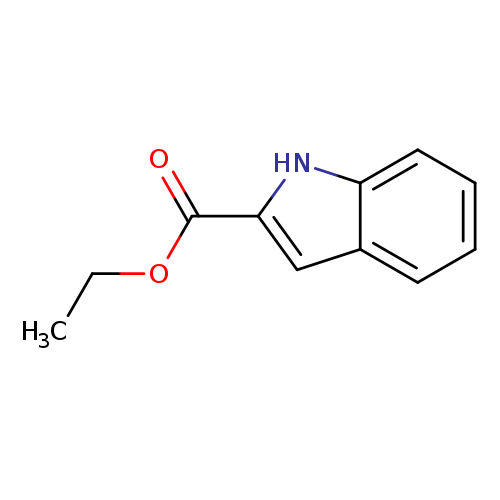
Ethyl Indole-2-carboxylateCatalog No.:AA0034TI CAS No.:3770-50-1 MDL No.:MFCD00005609 MF:C11H11NO2 MW:189.2105 |
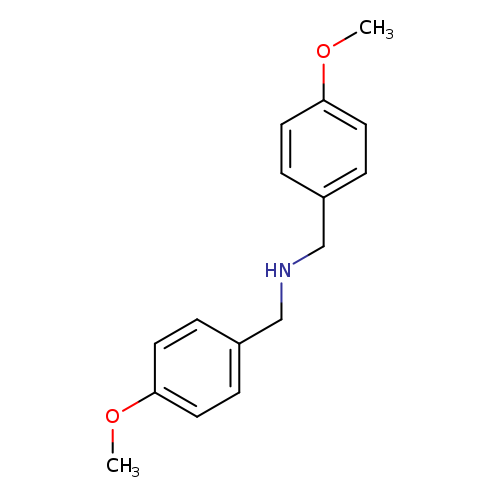
Bis(4-methoxybenzyl)amineCatalog No.:AA003587 CAS No.:17061-62-0 MDL No.:MFCD00277836 MF:C16H19NO2 MW:257.3276 |
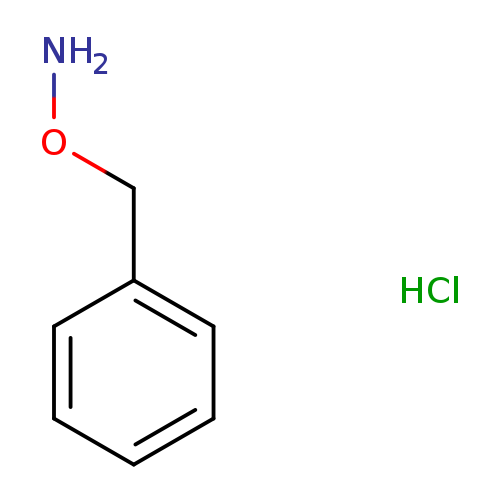
O-Benzylhydroxylamine HydrochlorideCatalog No.:AA0035CK CAS No.:2687-43-6 MDL No.:MFCD00012952 MF:C7H10ClNO MW:159.6134 |
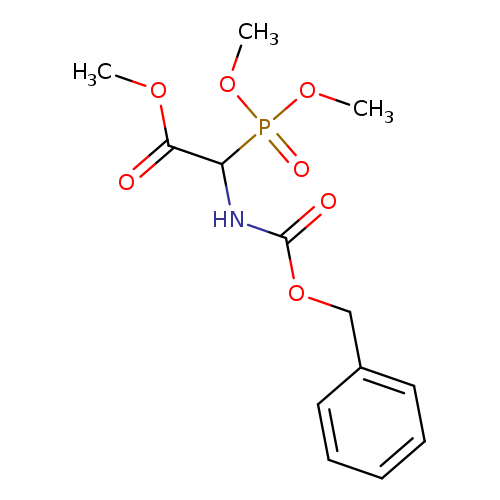
Methyl N-(benzyloxycarbonyl)-2-(dimethylphosphono)glycinateCatalog No.:AA0035QE CAS No.:88568-95-0 MDL No.:MFCD00043304 MF:C13H18NO7P MW:331.2583 |
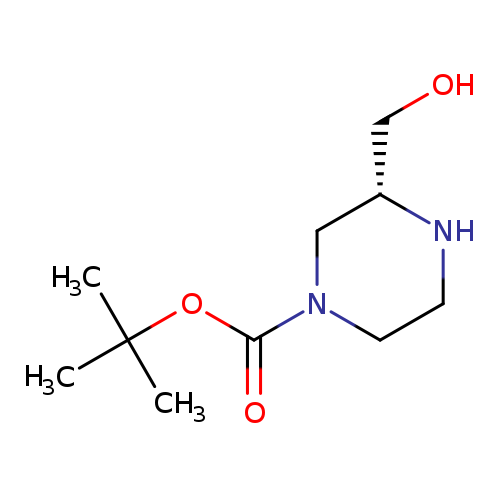
tert-Butyl (3R)-3-(hydroxymethyl)-1-piperazinecarboxylateCatalog No.:AA0037C3 CAS No.:278788-66-2 MDL No.:MFCD05863888 MF:C10H20N2O3 MW:216.2774 |
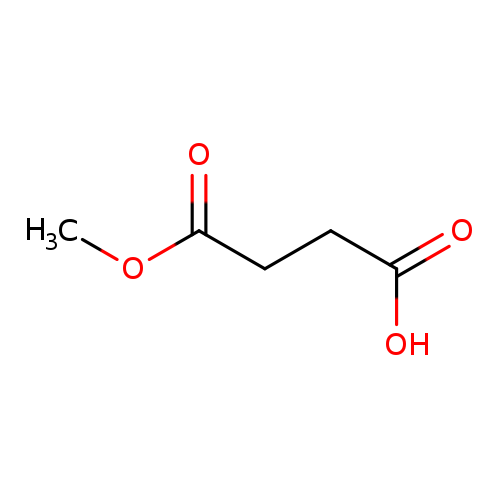
4-Methoxy-4-oxobutanoic acidCatalog No.:AA0037GL CAS No.:3878-55-5 MDL No.:MFCD00002788 MF:C5H8O4 MW:132.1146 |
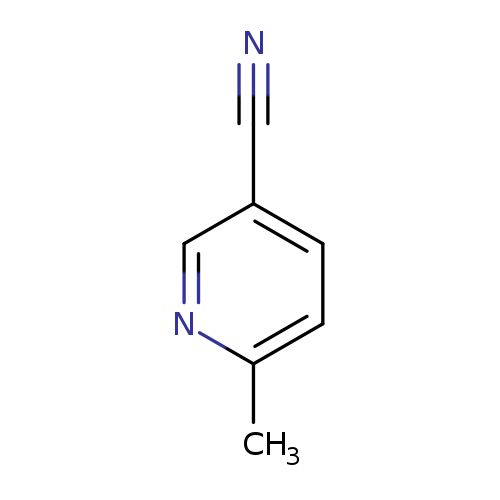
5-Cyano-2-methylpyridineCatalog No.:AA0037KG CAS No.:3222-48-8 MDL No.:MFCD00038042 MF:C7H6N2 MW:118.1359 |
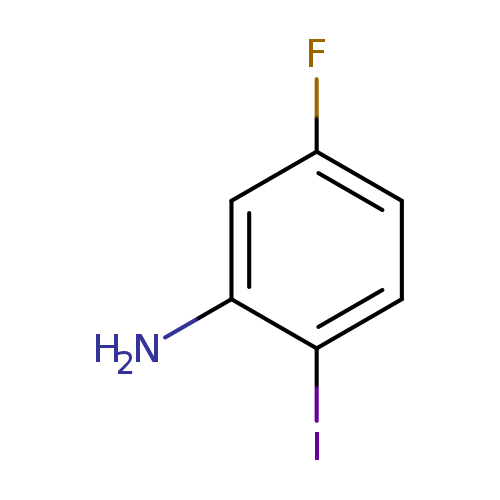
5-Fluoro-2-iodoanilineCatalog No.:AA0037O8 CAS No.:255724-71-1 MDL No.:MFCD02093953 MF:C6H5FIN MW:237.0135 |
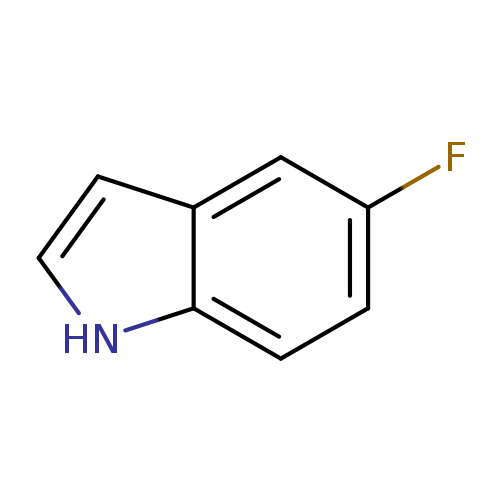
5-FluoroindoleCatalog No.:AA0037U3 CAS No.:399-52-0 MDL No.:MFCD18426003 MF:C8H6FN MW:135.1383 |
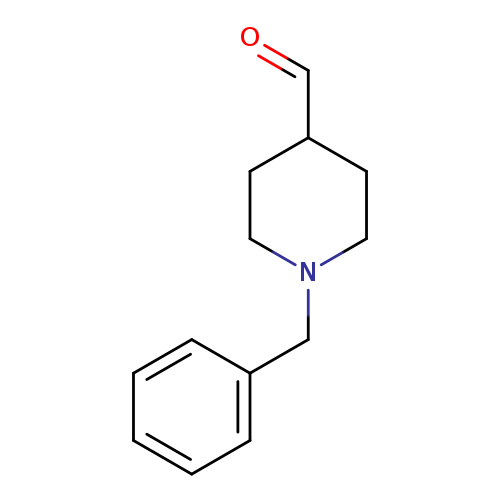
1-Benzyl-4-piperidinecarboxaldehydeCatalog No.:AA00383P CAS No.:22065-85-6 MDL No.:MFCD02258902 MF:C13H17NO MW:203.2802 |
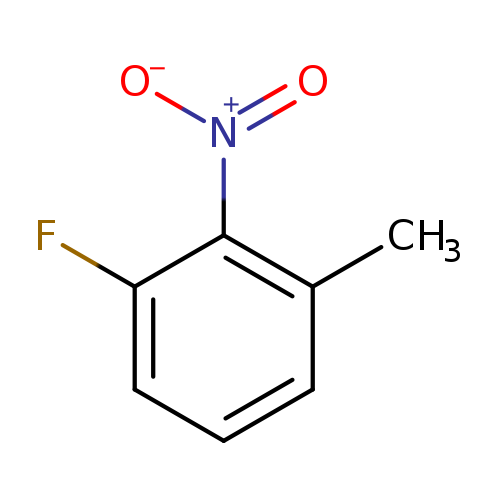
3-Fluoro-2-nitrotolueneCatalog No.:AA0038R6 CAS No.:3013-27-2 MDL No.:MFCD08458093 MF:C7H6FNO2 MW:155.1264 |
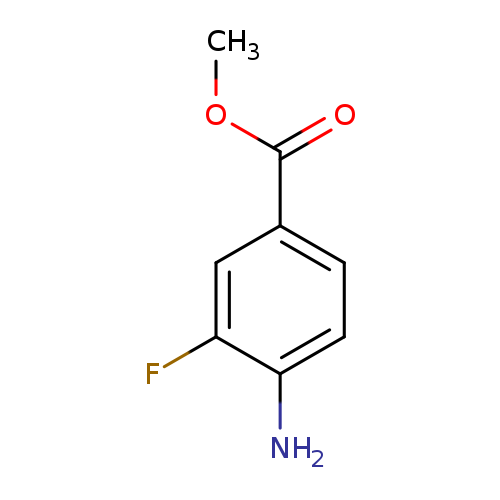
Methyl 4-amino-3-fluorobenzoateCatalog No.:AA0039A2 CAS No.:185629-32-7 MDL No.:MFCD08689703 MF:C8H8FNO2 MW:169.1530 |
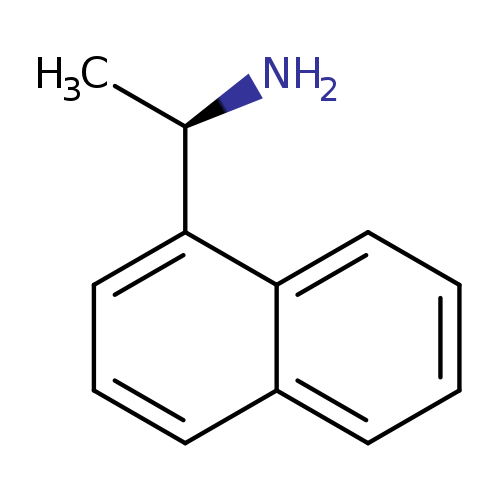
(R)-1-(Naphthalen-1-yl)ethanamineCatalog No.:AA003C1H CAS No.:3886-70-2 MDL No.:MFCD00064114 MF:C12H13N MW:171.2383 |
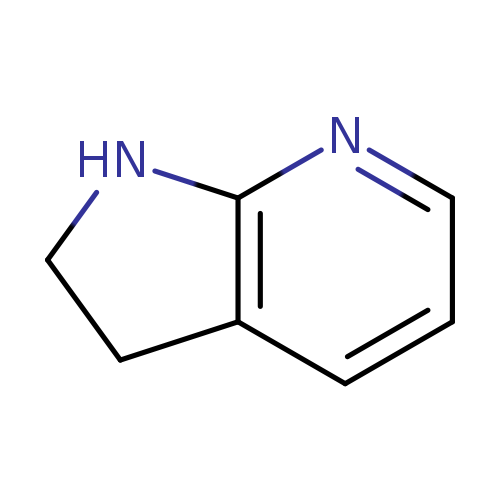
1H-Pyrrolo[2,3-b]pyridine, 2,3-dihydro-Catalog No.:AA003FG3 CAS No.:10592-27-5 MDL No.:MFCD06659751 MF:C7H8N2 MW:120.1518 |
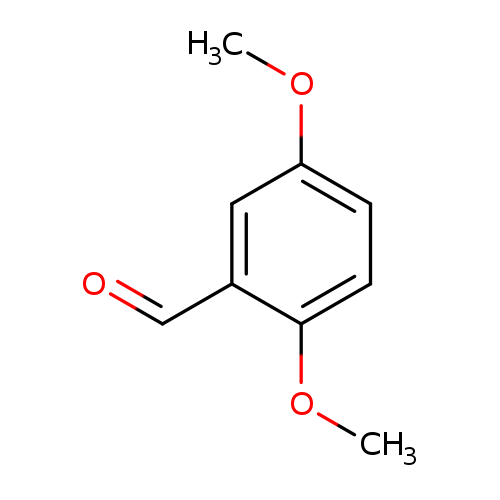
Benzaldehyde, 2,5-dimethoxy-Catalog No.:AA003FW3 CAS No.:93-02-7 MDL No.:MFCD00003314 MF:C9H10O3 MW:166.1739 |
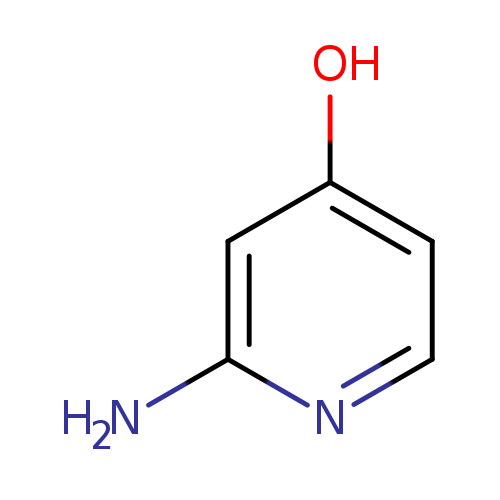
2-Aminopyridin-4-olCatalog No.:AA003GCK CAS No.:33631-05-9 MDL No.:MFCD04114161 MF:C5H6N2O MW:110.1139 |
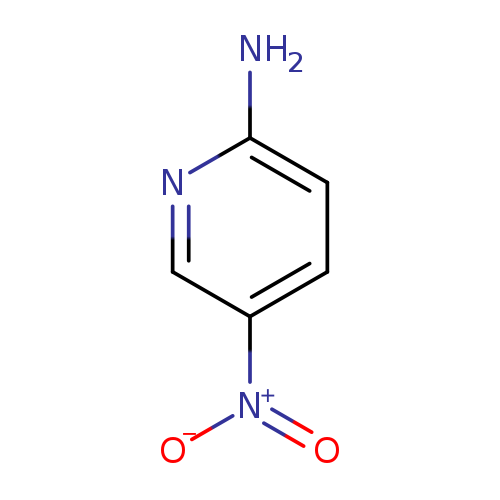
2-Amino-5-nitropyridineCatalog No.:AA003GEU CAS No.:4214-76-0 MDL No.:MFCD00006325 MF:C5H5N3O2 MW:139.1121 |
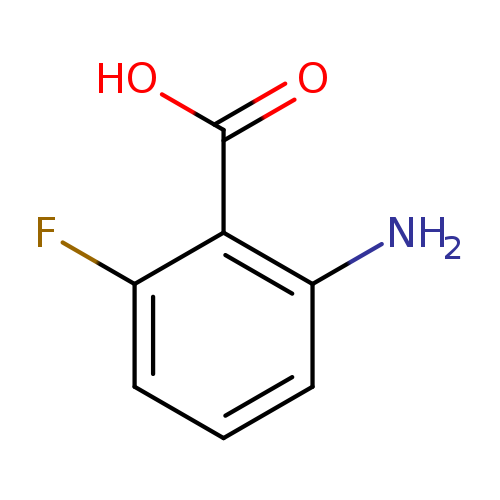
2-Amino-6-fluorobenzoic acidCatalog No.:AA003GFN CAS No.:434-76-4 MDL No.:MFCD00067781 MF:C7H6FNO2 MW:155.1264 |
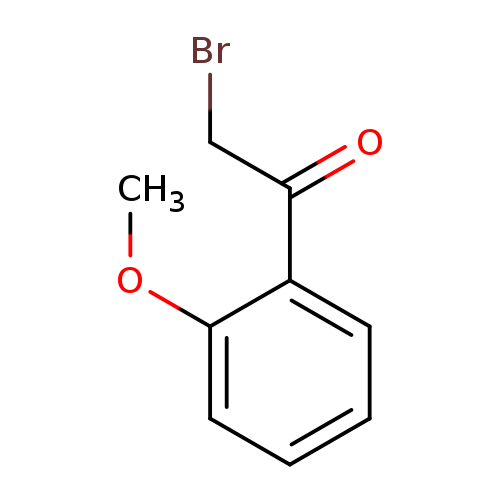
2-Bromo-1-(2-methoxyphenyl)ethanoneCatalog No.:AA003GJK CAS No.:31949-21-0 MDL No.:MFCD00000196 MF:C9H9BrO2 MW:229.0706 |
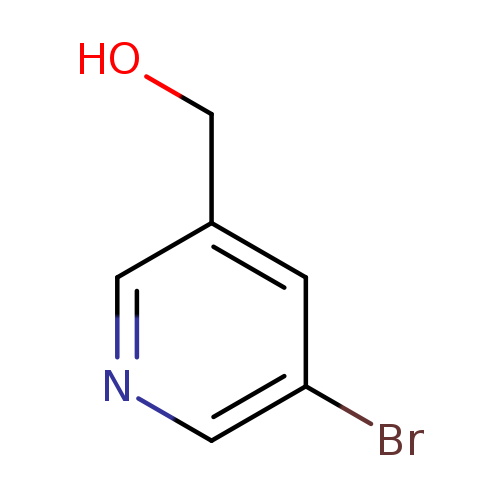
3-Pyridinemethanol, 5-bromo-Catalog No.:AA003J0L CAS No.:37669-64-0 MDL No.:MFCD03265757 MF:C6H6BrNO MW:188.0219 |
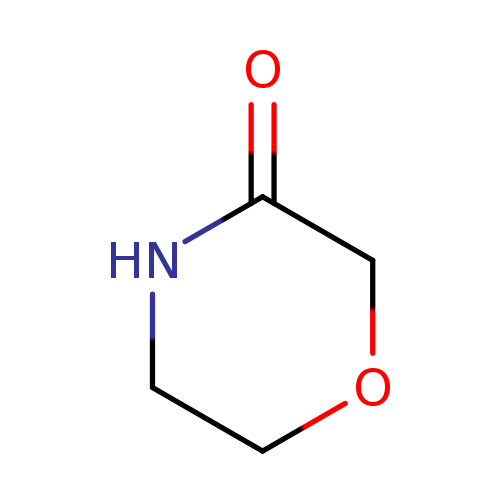
Morpholin-3-oneCatalog No.:AA003JJF CAS No.:109-11-5 MDL No.:MFCD00631009 MF:C4H7NO2 MW:101.1039 |
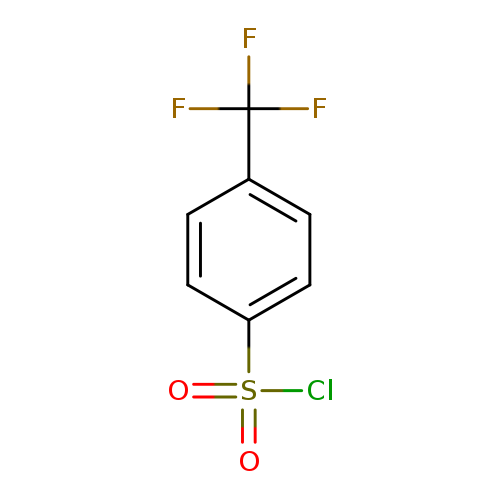
4-(Trifluoromethyl)benzenesulfonyl ChlorideCatalog No.:AA003K8S CAS No.:2991-42-6 MDL No.:MFCD00042422 MF:C7H4ClF3O2S MW:244.6187 |
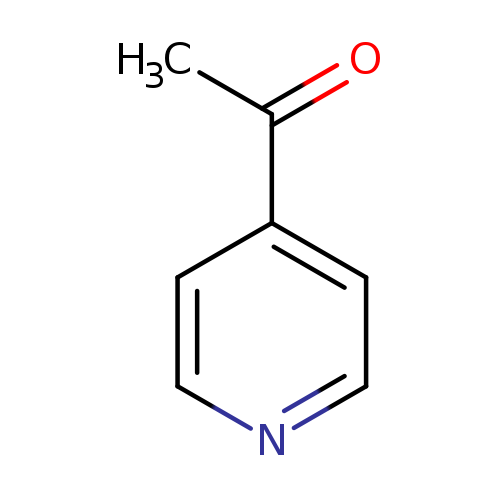
4-AcetylpyridineCatalog No.:AA003KKA CAS No.:1122-54-9 MDL No.:MFCD00059007 MF:C7H7NO MW:121.1366 |
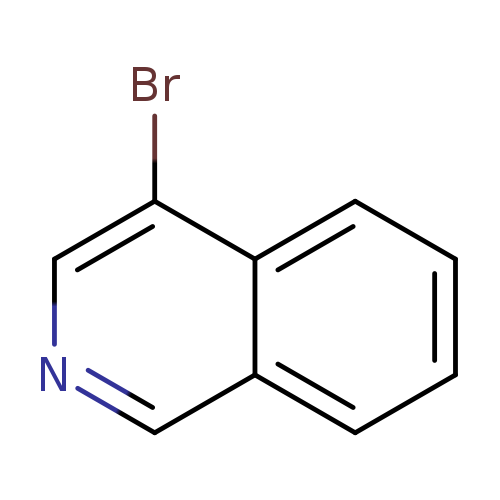
Isoquinoline, 4-bromo-Catalog No.:AA003KXC CAS No.:1532-97-4 MDL No.:MFCD00006904 MF:C9H6BrN MW:208.0546 |
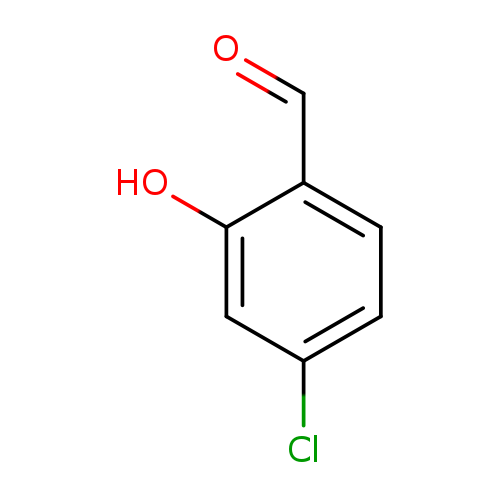
4-Chloro-2-hydroxybenzaldehydeCatalog No.:AA003L0K CAS No.:2420-26-0 MDL No.:MFCD06252499 MF:C7H5ClO2 MW:156.5664 |
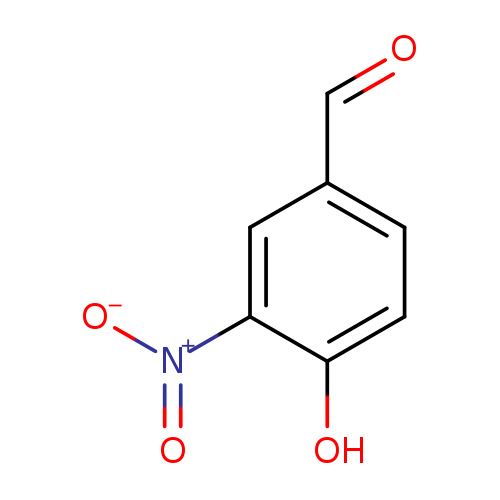
4-Hydroxy-3-nitrobenzaldehydeCatalog No.:AA003LFD CAS No.:3011-34-5 MDL No.:MFCD00007117 MF:C7H5NO4 MW:167.1189 |
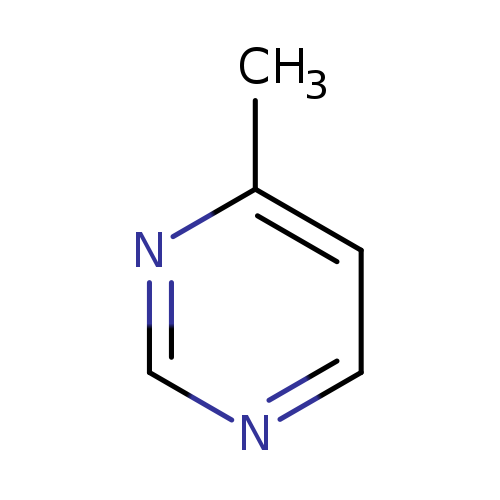
4-MethylpyrimidineCatalog No.:AA003LPV CAS No.:3438-46-8 MDL No.:MFCD00006115 MF:C5H6N2 MW:94.1145 |
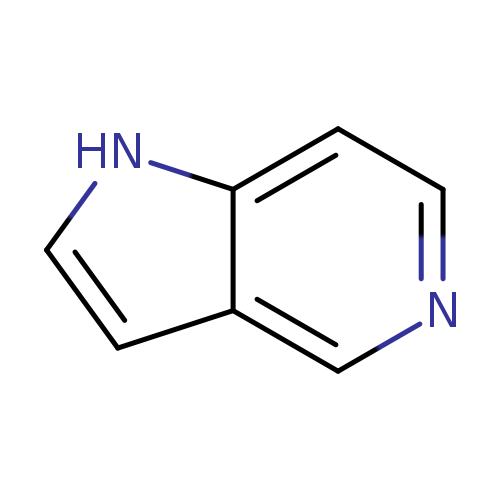
5-AzaindoleCatalog No.:AA003MC3 CAS No.:271-34-1 MDL No.:MFCD00955936 MF:C7H6N2 MW:118.1359 |
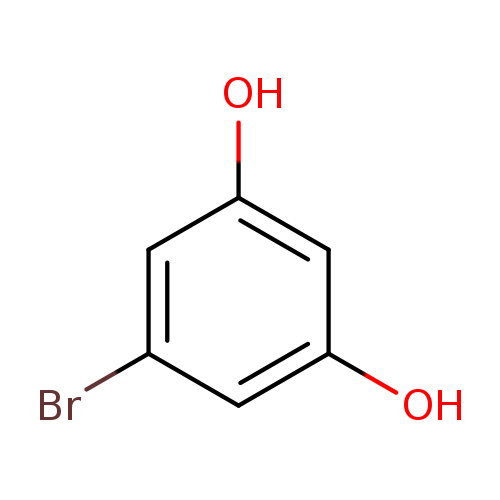
5-Bromobenzene-1,3-diolCatalog No.:AA003MI9 CAS No.:106120-04-1 MDL No.:MFCD16293393 MF:C6H5BrO2 MW:189.0067 |
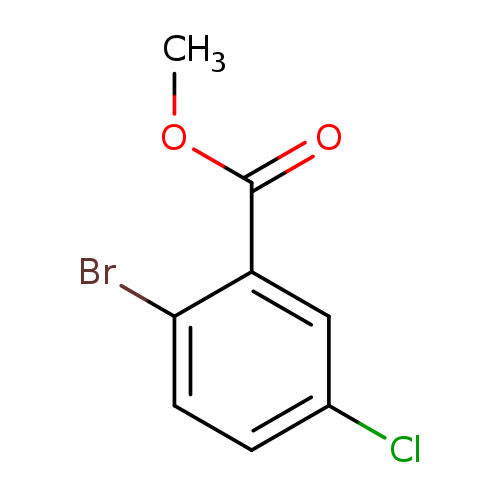
Methyl 2-bromo-5-chlorobenzoateCatalog No.:AA00BFIH CAS No.:27007-53-0 MDL No.:MFCD00144763 MF:C8H6BrClO2 MW:249.4890 |
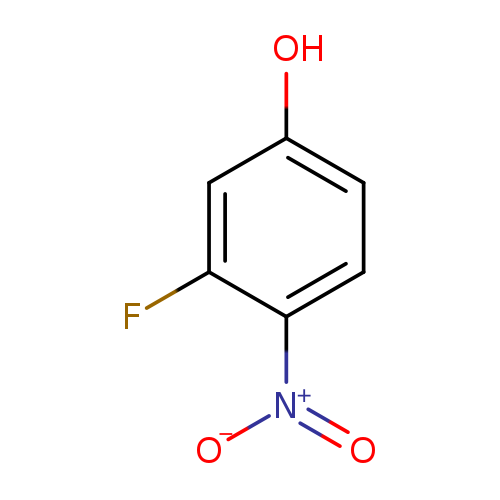
3-Fluoro-4-nitrophenolCatalog No.:AA00BXAA CAS No.:394-41-2 MDL No.:MFCD00041251 MF:C6H4FNO3 MW:157.0993 |
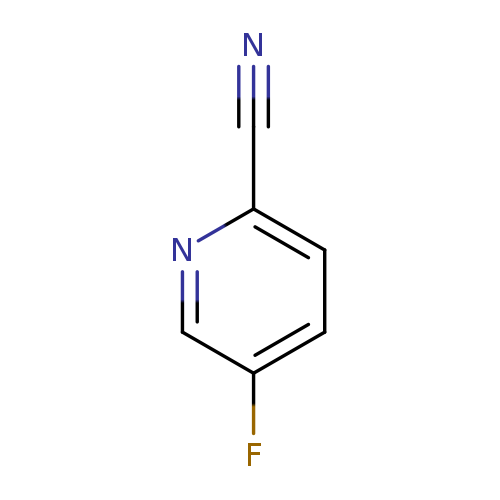
2-Cyano-5-fluoropyridineCatalog No.:AA00BYV0 CAS No.:327056-62-2 MDL No.:MFCD08741371 MF:C6H3FN2 MW:122.0998 |
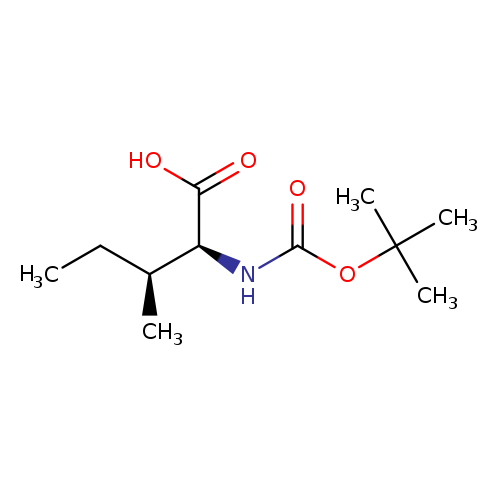
Boc-L-isoleucineCatalog No.:AA00HSDN CAS No.:13139-16-7 MDL No.:MFCD09951993 MF:C11H21NO4 MW:231.2887 |
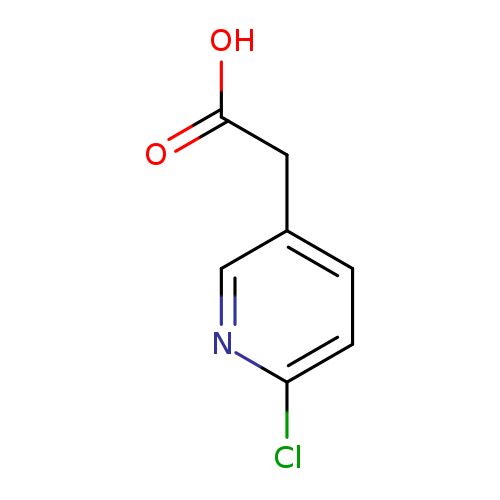
2-(6-Chloropyridin-3-yl)acetic acidCatalog No.:AA00I7QX CAS No.:39891-13-9 MDL No.:MFCD01863172 MF:C7H6ClNO2 MW:171.5810 |
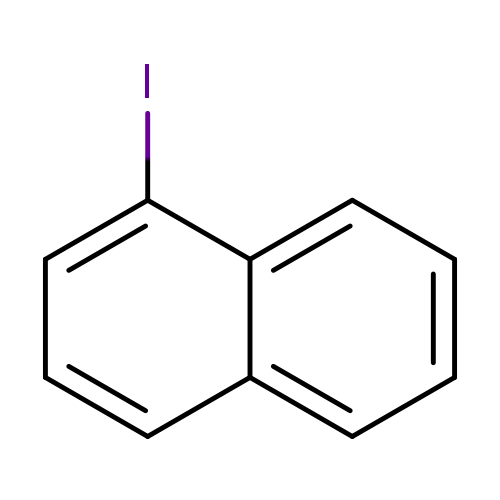
1-IodonaphthaleneCatalog No.:AA00IFV6 CAS No.:90-14-2 MDL No.:MFCD00003876 MF:C10H7I MW:254.0670 |